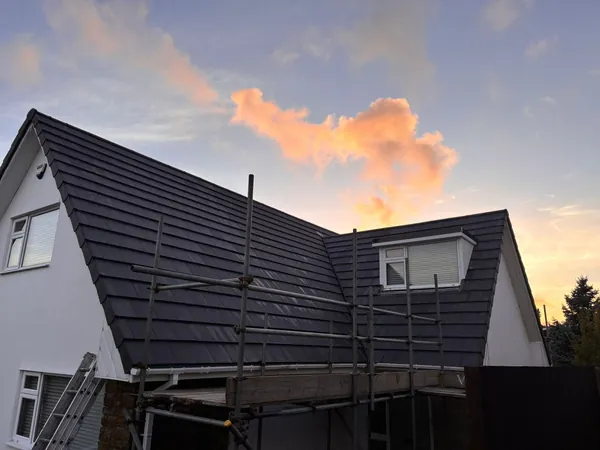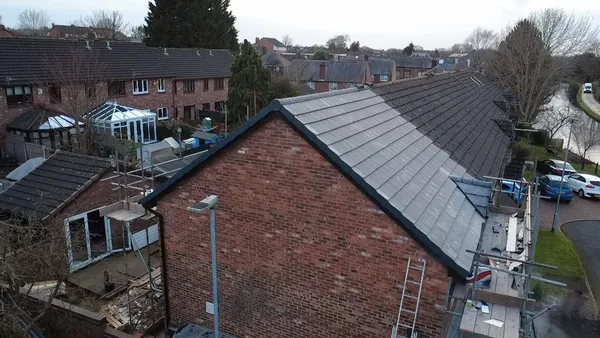
If your extension roof is leaking against the wall of the house, the fault is almost always in one of four places: the lead flashing along the junction, a missing or failed cavity tray in the house wall above it, the upstand of a flat roof where it turns up the brickwork, or the wall itself soaking up rain. In Chester most of these fixes cost between £200 and £900. The expensive one is a cavity tray that was never fitted, which can run to £1,200-£2,500 because bricks have to come out to put it in. The problem turns up all over the city, on Victorian kitchen lean-tos in Hoole and Newton just as much as on the 1990s garden rooms tacked onto semis in Upton and Vicars Cross. Below we cover how to tell which part has failed, what each repair costs in 2026, which quick fixes are worth avoiding, and who should pay if the extension is only a few years old.
Why Does My Extension Roof Leak Where It Meets the House?
Because it's the hardest joint on the whole building to keep dry. Two structures built at different times, often by different people, meet along one line. Rain running down the house wall hits that line, and so does rain coming down the extension roof the other way. Wind pushes water sideways into it. Anything slightly wrong at that joint lets water in.
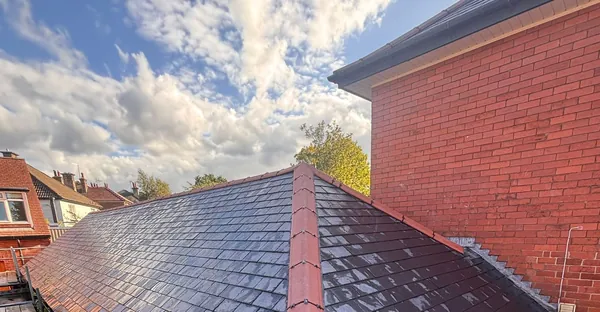
On a typical Chester extension, these are the parts doing the work at the junction:
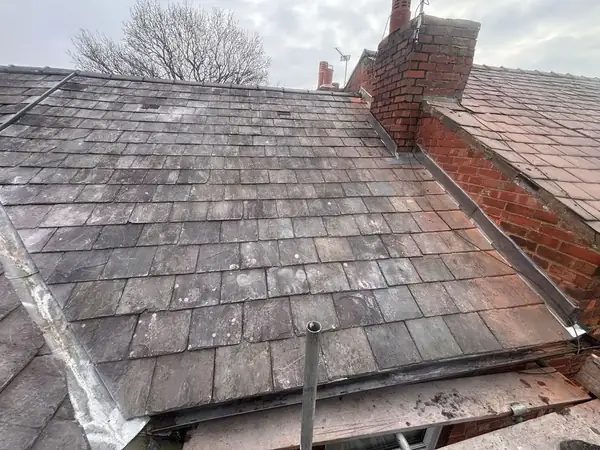
- Abutment flashing - lead (or sometimes a cement fillet on older lean-tos) tucked into the mortar joints of the house wall and dressed down over the extension roof
- Soakers - small lead or aluminium pieces under each slate or tile at the side of a lean-to, under the stepped flashing
- Cavity tray - a membrane or tray built inside the house wall that catches water running down the cavity and sends it out through weep holes above the extension roof
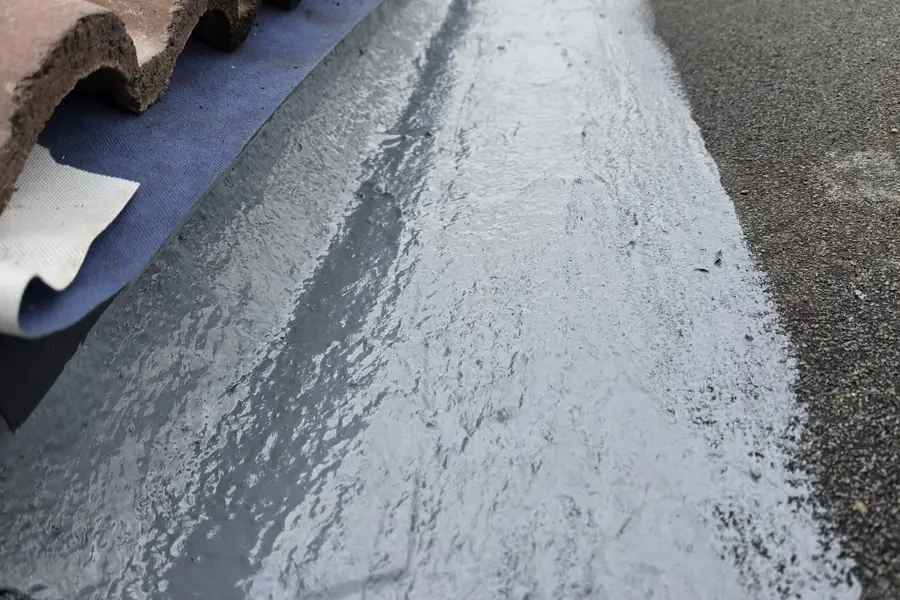
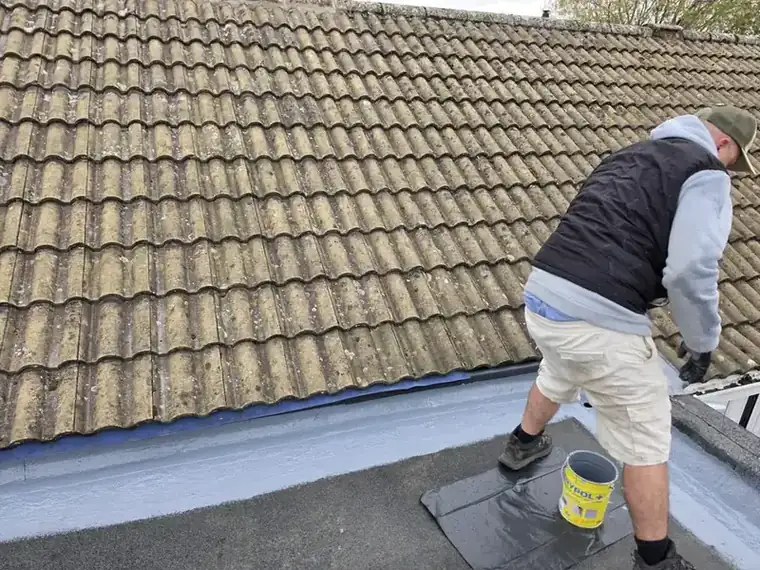
- Flat roof upstand - on flat-roofed extensions, the felt, rubber or GRP turned up the wall by at least 150mm, with a lead or metal cover flashing over the top
- The wall above - brickwork, pointing or render that should shed rain rather than soak it up
Chester's weather doesn't help. Rain off the Welsh hills tends to arrive on south-westerly winds, so the backs of houses facing that way take it sideways for hours at a time. A junction that copes with drizzle can still let water in during an autumn gale. If you're not even sure the leak is at the junction yet, our guide to why water shows up far from the fault is the place to start.
How Can You Tell Which Part of the Junction Is Leaking?
Watch when it leaks. The weather that sets it off tells you more than the stain does. A roofer will ask you these questions before going up a ladder, so it saves time if you've noted the answers.
- Leaks in any steady rain - usually the flashing or the flat roof upstand. Water is getting straight past the junction itself.
- Leaks only in wind-driven rain from one direction - points to the wall above or a missing cavity tray. Rain is soaking into the house wall and running down inside it.
- Leaks hours after the rain stops, or for a day afterwards - classic cavity water. The wall soaks up rain like a sponge and drains slowly.
- Damp patch right at the wall line inside the extension - flashing, tray or upstand. A patch a metre or more away from the wall is more likely the roof covering itself.
- Stain on the house wall inside, above the extension ceiling - the wall, not the roof.
A few things you can check from the ground or an upstairs window:
- Can you see weep holes (small gaps or plastic vents in the brick joints) on the house wall just above the extension roof? No weep holes on an extension built after the mid-1980s is a red flag for a missing tray.
- Has the lead lifted away from the wall, or has the mortar along its top edge fallen out?
- Is there a crack between the extension roof and a cement fillet instead of lead?
- Does a downpipe from the main roof empty straight onto the extension roof near the wall?
A roofer may also run a hose test: wetting one part at a time, starting low and working upwards, with someone watching inside. That takes an hour or two and is often included in an inspection fee of around £80-£200.
How Much Does It Cost to Fix a Leak Where an Extension Meets the House?
Most junction leaks in Chester cost £200-£900 to put right properly. A missing cavity tray is the exception, at around £1,200-£2,500. If the whole extension roof is past saving, you're into re-roofing figures instead.

Typical 2026 prices for single-storey extensions, including labour and materials:
- Inspection and leak test (no repair on the day) - £80-£200
- Re-wedge and repoint existing lead flashing - £150-£350
- New lead cover or apron flashing to a flat roof extension (3-5m run) - £250-£600
- New stepped flashing and soakers to a pitched lean-to (one side) - £350-£900
- Replace a cracked cement fillet with lead - £300-£700
- Repair a split flat roof upstand at the wall - £200-£600
- Retrofit a cavity tray along the abutment, plus new flashing - £1,200-£2,500
- Re-roof a small flat roof extension (around 6m x 3m) - £1,400-£4,000 depending on felt, EPDM or GRP
How those figures break down:
- Labour - roofers generally charge £280-£360 a day, or £560-£720 for two. Most flashing jobs are half a day to a day. A cavity tray retrofit is usually two or three days for two people.
- Lead - only £8-£15 a metre for the sheet itself, so materials are a small part of the bill
- Access - single-storey roofs can often be done from ladders or a small tower. Full scaffolding (£300-£800) is only usually needed if the junction sits under a high gable or over a conservatory.
- Making good inside - plastering and redecorating a stained ceiling is a separate job, often £150-£400
These ranges are drawn from current UK cost guides, including MyJobQuote's September 2026 roof leak figures and Which?'s survey of Trusted Traders, adjusted for Chester. Your own quote will depend on what's found once the old flashing is lifted.
What Pushes the Price Up or Down in Chester?
Length of junction and access matter most. After that, it comes down to what the house is made of and what the last person did to it.

- Victorian brick and soft lime mortar - common in Hoole, Newton, Boughton and Handbridge. The joints are soft, so wedges work loose sooner and the lead may need re-chasing into fresh cuts.
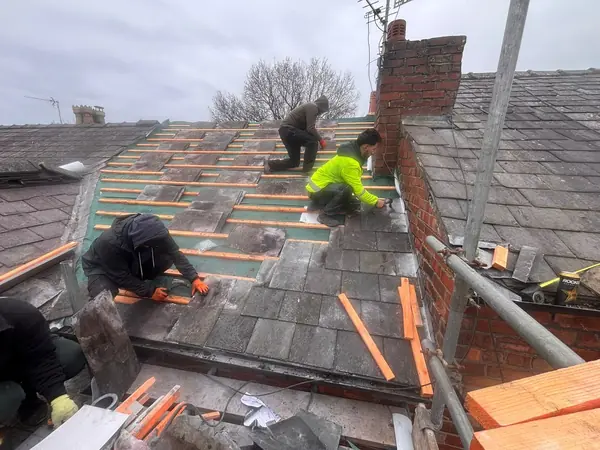
- Slate lean-tos on terraced back returns - each slate along the side needs its own soaker, which adds time compared with a flat roof apron
- Render on the house wall - the flashing has to be let into a chase cut through the render, and the render then patched to match
- Old repairs to remove - layers of bitumen paint, flashing tape or silicone take time to strip back before anything new can go on
- A conservatory or glass roof below - more care, sometimes a tower, and slower going
- Conservation areas and listed buildings - much of central Chester and several of its older suburbs sit in conservation areas. Like-for-like repairs don't usually need permission, but using lead rather than a cheaper substitute is often expected.
- Hidden rot - if water has been getting in for a winter or two, the timber wall plate or the first rafter along the junction may be soft. That can add £200-£600.
Is It the Flashing, a Missing Cavity Tray or Something Else?
The symptoms overlap a lot, which is why a proper look is worth paying for before you pay for a repair. Here's how the usual suspects line up.

| Likely cause | Typical sign | Usual fix | Rough cost |
|---|---|---|---|
| Loose or lifted lead flashing | Leaks in steady rain, lead visibly away from wall | Re-wedge, repoint or replace lead | £150-£600 |
| Cracked cement fillet | Hairline gap along the junction, older lean-to | Cut out, fit lead flashing | £300-£700 |
| Missing soakers or short flashing | Damp along one side of a pitched lean-to | Strip edge slates, fit soakers and stepped lead | £350-£900 |
| Split flat roof upstand | Leak right at the wall line of a flat roof | Patch or re-form upstand, new cover flashing | £200-£600 |
| No cavity tray | Leaks only in driving rain, wet after it stops | Retrofit stepped tray and weep vents | £1,200-£2,500 |
| Porous wall above | Damp high on the inside of the house wall | Repoint, replace spalled bricks, repair render | £300-£1,500 |
| Downpipe emptying at the junction | Leaks in heavy downpours only | Extend the downpipe to the gutter | £60-£200 |
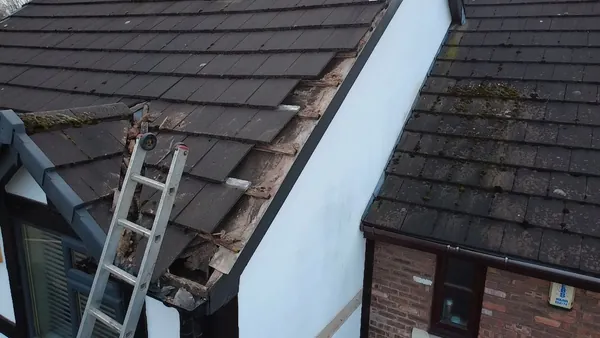
The cavity tray is the one people miss. The LABC's guidance on cavity trays says they should be fitted at roof abutments, stepped where the roof is pitched, with weep holes no more than 900mm apart. It also says a new abutment on an extension will usually need trays retrofitted into the existing house wall. Plenty of extensions in Chester were built without one, particularly older and DIY ones, and no amount of new flashing will stop water that's coming down inside the wall.
Will Flashing Tape or Mastic Stop the Leak?
For a week or a season, maybe. For good, no. Self-adhesive flashing tape and tubes of mastic are sold as quick fixes, and they have their place as an emergency patch. They don't deal with why the junction failed, and they make the proper repair slower once they've set.
| Repair | Cost | Lasts | Good for | Not good for |
|---|---|---|---|---|
| Flashing tape or mastic | £20-£150 | 1-3 years | Emergency patch until a roofer comes | Anything permanent |
| Re-wedge and repoint lead | £150-£350 | 10-20 years | Sound lead that's just come loose | Split or short lead |
| New code 4 or 5 lead flashing | £250-£900 | 50+ years | Most pitched and flat junctions | Water coming from inside the wall |
| Retrofit cavity tray plus lead | £1,200-£2,500 | Life of the building | Driving-rain leaks with no weep holes | A simple loose flashing |
Three things the table doesn't say:
- Mastic smeared along the top of lead seals it to the wall for a while, but traps water behind the lead once it cracks. It also has to be cut and scraped off before anyone can re-wedge.
- Lead flashing works because it's let into the mortar joint and held with wedges, not stuck on. Long pieces should be kept short (no more than about 1.5m for code 4) so they can expand and contract without splitting.
- Cement fillets were common on 1950s-1970s lean-tos. They crack as the two buildings move slightly apart, and patching them with more mortar rarely lasts a winter.
Our honest view is that tape is fine to get you through a storm weekend. Then get it done in lead.
Who Pays If the Extension Is Only a Few Years Old?
If the extension was built recently and the junction leaks, the builder may well be responsible. Start with the paperwork before paying anyone else to fix it.

What to check:
- The builder's guarantee - many give 1-10 years on workmanship. Ask them back first, in writing, with photos and dates of the leaks.
- Your consumer rights - under the Consumer Rights Act 2015 a service has to be carried out with reasonable care and skill. In England you generally have up to six years from the work to bring a claim.
- Building control sign-off - extensions need building regulations approval. Cheshire West and Chester Council's building regulations service can tell you whether a completion certificate was issued. The council only keeps building regulation records for around 17 years.
- Insurance-backed or structural warranties - check whether one was sold with the build, and what it covers
- Home insurance - usually covers the water damage inside after a sudden event, not the cost of fixing a junction that was built wrong
The rules on keeping water out of walls sit in Approved Document C of the Building Regulations. An extension built without a cavity tray where one was needed may not meet them, which is useful to know when you're talking to the original builder.
If the extension was built without approval, or the original builder has gone, Cheshire West and Chester can issue a regularisation certificate for unauthorised work started after November 1985. That matters when you come to sell, because a buyer's solicitor will ask.
How Do You Stop the Leak Coming Back?
Fix the cause, not the stain. Then give the junction a quick check every autumn. Most of this costs little or nothing.

- Get one proper diagnosis - paying £100 for a leak test is cheaper than paying twice for the wrong repair
- Bundle the jobs - if a roofer is already lifting the flashing, repointing the wall above at the same time saves another call-out
- Sort the downpipe - a main-roof downpipe dumping water onto the extension at the wall is a cheap fix that takes a big load off the junction
- Clear the gutters - an overflowing gutter on the main roof pours water straight down the wall above the flashing
- Check after storms - look from an upstairs window for lifted lead or gaps along the joint
- Avoid painting it over - bitumen paint on lead and brickwork hides problems and makes later repairs harder
- Keep moss and leaves off flat roofs - debris piled against the upstand holds water right at the weakest point
If the extension roof covering itself is near the end of its life, it's often better value to renew it and the junction together. Our roof repairs service covers both, so you only pay for access once.
What Should You Ask a Roofer Before They Start?
A good roofer will explain what they think is wrong and why, before they quote. These questions sort the careful ones from the "we'll seal it up" crowd.

- What do you think is causing it, and how will you confirm that? A guess without a test is a guess.
- Will you use lead, and what code? Code 4 for most stepped flashings, code 4 or 5 for aprons. Not tape, not mastic.
- Will the lead be chased into the mortar joint and wedged? It should be, not stuck to the face of the wall.
- Is there a cavity tray, and how do you know? Look for weep holes, or ask them to check the drawings.
- Is the quote itemised? Flashing, soakers, repointing, any timber and access should each have a line.
- What guarantee do you give on the repair? Get it in writing.
- Can I see reviews from local customers? Google, Checkatrade or Trustpilot, with recent jobs near Chester.
- Do you have public liability insurance? Ask to see it.
Get at least two or three quotes if the repair is over a few hundred pounds. If one quote is much lower, check what's been left out. It's often the soakers or the tray.
So, Repair the Junction or Re-Roof the Extension?
In most cases, repair the junction. A flashing or upstand fault on an otherwise sound extension roof is a £200-£900 job, done in a day, and done properly in lead it should outlast the roof around it. Only re-roof if the covering itself is failing, or if you're taking the junction apart anyway to fit a cavity tray and the roof is already 20 years old or more.

If we had to give one piece of advice, it would be to find out which part is failing before anyone touches it. Leaks that only show in driving rain are the ones most often "fixed" with new flashing, only to come back the next storm because the water was never getting past the flashing in the first place.
If your extension is leaking where it meets the house anywhere in Chester or the surrounding villages, we can take a look, test it and tell you what we find. Ask for a free roof check in Chester.
Extension Roof Leak Questions From Chester Homeowners
Why does my extension only leak when it's windy?
Wind-driven rain is soaking into the house wall above the extension and running down inside the cavity. If there's no cavity tray, or it's blocked, that water comes out on top of your extension ceiling. New flashing won't stop it. The usual fix is a stepped cavity tray with weep vents, or in milder cases repointing and sealing the wall above.
How long does it take to fix a leaking extension flashing?
Most flashing repairs take half a day to a day. Replacing the stepped flashing and soakers on one side of a lean-to is usually a day. Retrofitting a cavity tray takes longer, usually two or three days, because the brickwork above the roof has to be cut out and rebuilt in short sections.
Can I just put flashing tape over the gap?
As an emergency patch, yes. It will usually hold for a few months to a couple of years. It won't fix the cause, and if it's stuck over lead or mortar it has to be stripped off before a proper repair. If the leak is coming from inside the wall, tape won't help at all.
Do I need planning permission to repair the flashing on my extension?
No. Repairing or replacing flashing like for like doesn't need planning permission. If your home is listed, check with Cheshire West and Chester Council before changing materials, because listed building consent can apply to repairs that alter the building's character.