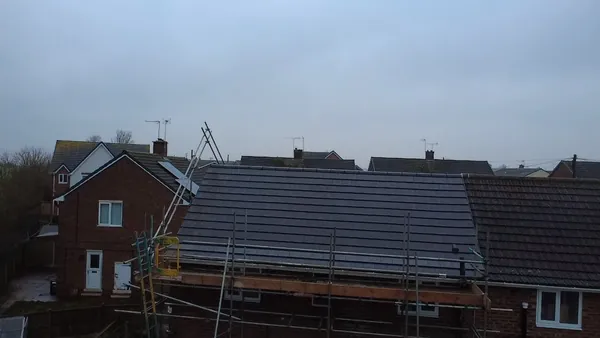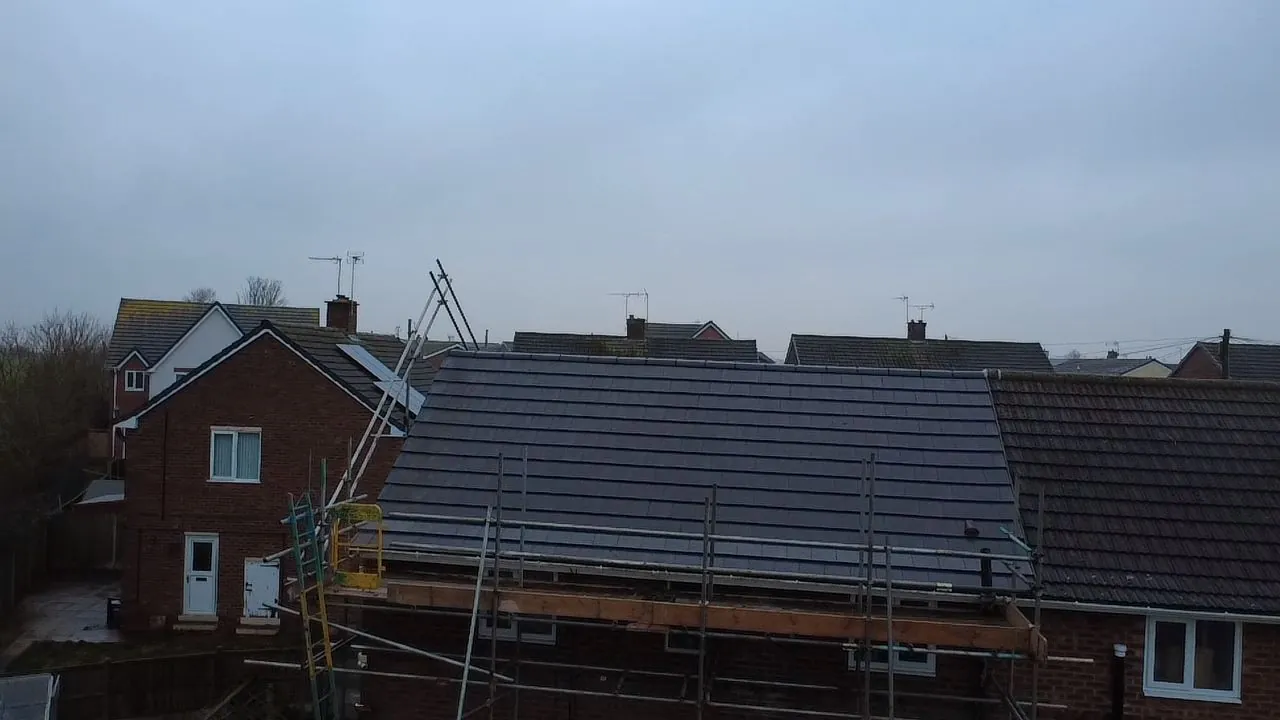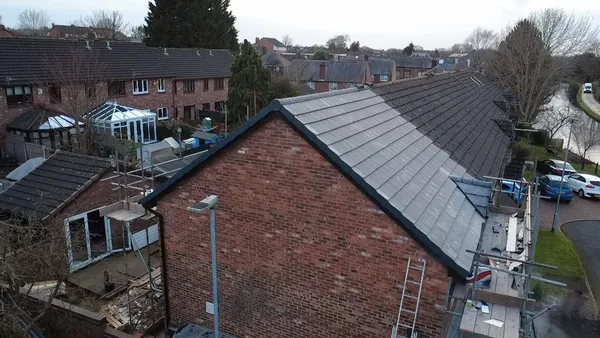
Connah's Quay is the biggest town in Flintshire, with 16,771 people at the 2021 census, and it sits on the bank of a tidal estuary that funnels weather straight in from Liverpool Bay. Shotton, its neighbour, had 6,663 residents in 2011, and Queensferry, a short way upriver, just 2,109. Between them they hold a lot of roofs, and a lot of different kinds of roof. If you're looking for roof repairs in Connah's Quay, Shotton or Queensferry, the useful questions are what your house was built for, how exposed it is to the river, and whether you own it, rent it or rent it out, because Welsh law answers that last one differently from England. Most of the repairs we quote on this stretch of Deeside come in between £180 and £1,200. This guide covers the housing, the weather, the flood maps, the rules and the prices.
Roof Repairs in Connah's Quay, Shotton and Queensferry: Why the River Matters
None of these towns would exist without the Dee. They grew because of the water. The New Cut channel was dug from 1737 after silting ended Chester's life as a port, and the quays at Connah's Quay followed in 1773 and 1791. The railways came next, and in 1896 John Summers & Sons opened the steelworks that would employ more than 13,000 people at its height. Our main roof repair service for Deeside covers all three towns, along with the villages between them.
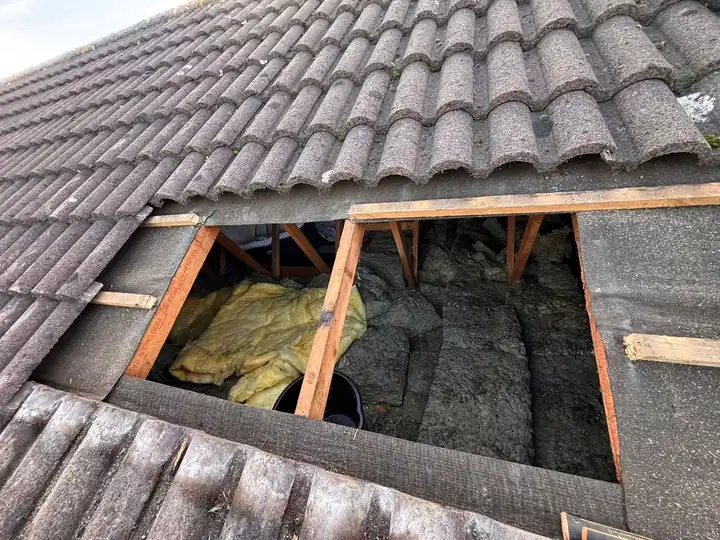
The river also brings the weather and, on the lowest ground, the flood risk. Those two things explain most of what goes wrong with roofs here, and they're why two houses ten minutes apart can need completely different work.
Steelworks Terraces, Postwar Estates and New Builds
The oldest housing is close to the water and the railway. Flintshire's own place-making plan for Connah's Quay describes the town's identity as tied to its Victorian red-brick buildings and the docks, and you can still see terraced houses mixed in among the shops on the High Street and on the roads leading down to Dock Road. In Shotton, the council describes most of the privately owned housing as older terraces, with a large share now let privately, some of it as houses in multiple occupation. These terraces went up for people working at the docks, on the railways and, above all, at the steelworks.

Heavy steelmaking at Shotton ended on 31 March 1980 with around 6,500 jobs lost, but the housing stayed. After the Second World War, the old Wepre Hall estate was gradually built over with housing estates, and by the 1970s Connah's Quay had swallowed the hamlets of Golftyn, Kelsterton and Wepre as more estates went up. Large developments kept coming from the 1990s onwards. The newest homes are on the Northern Gateway side of the river, on the former steelworks land at Garden City and the old RAF Sealand airfield, where builders have been working through several hundred plots since the early 2020s.
Queensferry is the smallest of the three. It was called Lower Ferry until 1820, then Kingsferry, then Queensferry from Victoria's coronation in 1837, and its blue bascule bridge over the Dee dates from 1926. Its houses sit on flat, low land by the river and the A494, which matters for the flood section below.
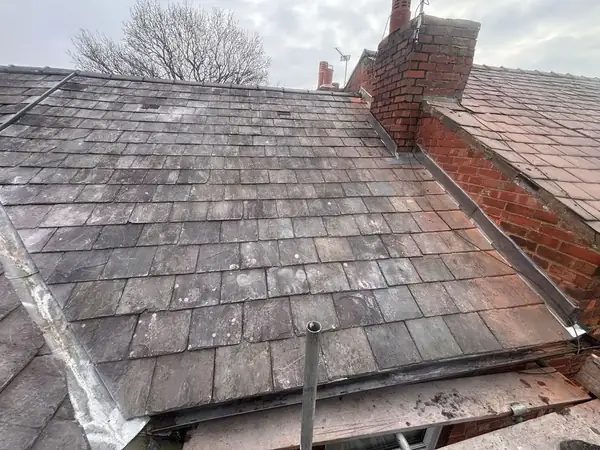
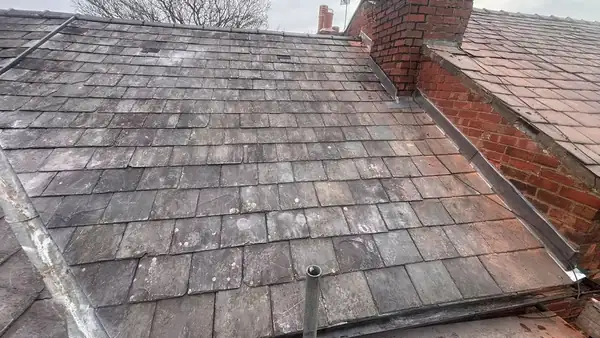
On the roofs themselves, the age of the house tells you most of what to expect. Victorian and Edwardian terraces are usually slate, and the original iron nails are often rusting through by now. Add shared chimney stacks and back additions with their own little roofs and valleys, and there are plenty of places for water to find a way in. The postwar and 1970s estates mostly have concrete interlocking tiles on trussed rafters, and the weak point is the mortar holding the ridge and verge tiles, which has done 50 years or more. Anything built from the 1990s on is generally still sound. Faults there are small ones: a dry verge cap blown off, a roof window seal gone, a flat-roofed porch that was never quite right.
What the Dee Estuary Does to a Deeside Roof
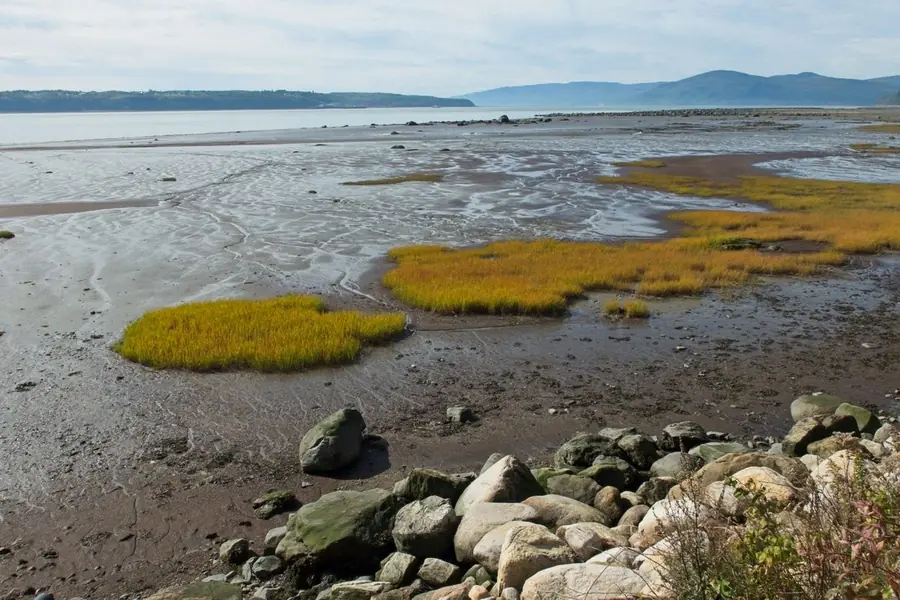
Look north-west from Connah's Quay and there's nothing much between you and the open sea except mudflats, saltmarsh and the widening estuary. Wind coming up the Dee meets no hills and few trees before it reaches the first row of houses. You can predict most of the damage from that.
Edges go first. Gusts get under the verge on a gable end and under the last course of tiles at the eaves, and any tile that relies on old mortar or a single corroded nail is the one that lifts. We find most storm damage on the windward gable or the front slope facing the river, not in the middle of the roof.
Then there's the rain, which here often arrives sideways. It gets pushed into cracked ridge mortar, behind lead flashings that have lifted, and up under laps on low-pitched extension roofs. A roof that keeps the water out on a still, wet day can still leak in a westerly gale, which is why some leaks only show up in certain weather.
Salt does its damage more slowly. Air off a tidal estuary carries a little salt, and over decades it adds to the corrosion of old iron nails, nail-fixed clips and cheap galvanised fittings. Stainless steel or copper fixings cost very little extra on a repair, and on a house that faces the water we use them as standard.
Flood Zones Near the River, and Where Your Roof Comes In
Since 31 March 2025, planning decisions in Wales have used the Flood Map for Planning published by Natural Resources Wales, which replaced the old Development Advice Map. The Natural Resources Wales Flood Map for Planning shows Flood Zones 2 and 3 for rivers and the sea, factors in climate change, and marks out TAN15 Defended Zones behind flood defences. Large parts of the low ground along the Dee fall inside those zones.

NRW's 2023 flood plan for the region named Connah's Quay and Shotton as places facing a significant threat from the Dee, said Queensferry and Sandycroft are exposed to both river and sea flooding, and put the defences at Garden City under structural assessment. Across North East Wales it counted 15,686 properties at risk of flooding from the sea.
A roof repair doesn't need any flood checks. Where the zones do matter is any project that changes the house: a new extension, a flat-roofed garage, a raised roof. Those go through Flintshire's planning process, and the Welsh Government's TAN15 flood guidance decides what is acceptable in each zone.
Roofs and flood risk also meet in a simpler way. On low ground, rainwater has nowhere fast to go. When heavy rain comes on a high tide, a blocked gutter or a downpipe that empties against the wall puts water exactly where you don't want it. Clearing gutters before winter costs a fraction of drying out a wall.
What Roof Repairs Cost on Deeside in 2026
The figures below are what we'd expect to charge in 2026 for a typical terrace or semi in Connah's Quay, Shotton or Queensferry, VAT included. They assume access by ladder or tower unless scaffold is listed separately.
| Job | 2026 guide price |
|---|---|
| Refix up to six slipped concrete tiles | £180 - £400 |
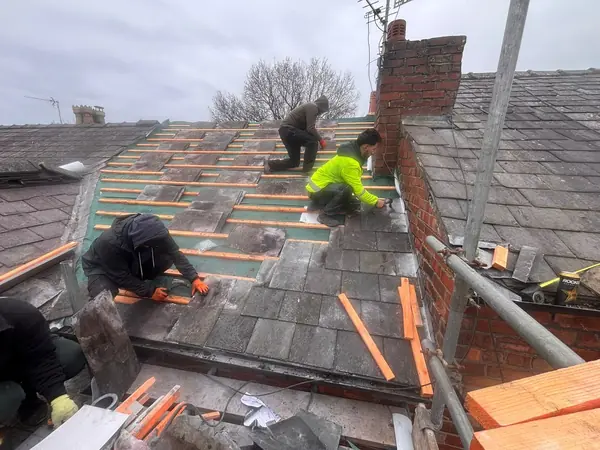
| Clip back a run of slipped slates on a terrace front | £250 - £550 |
| Replace a cracked ridge tile and rebed the run | £350 - £800 |
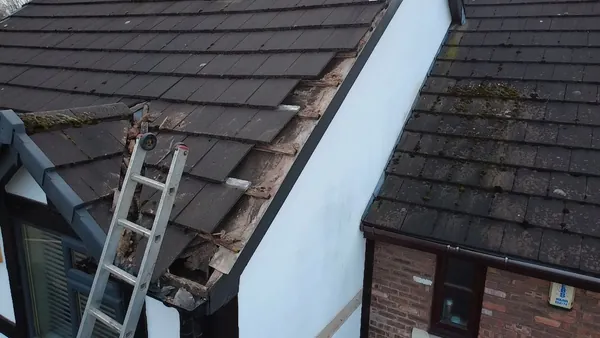
| Dry verge system fitted to one gable end | £380 - £680 |
| Lead flashing renewed around a chimney stack | £400 - £900 |
| Chimney repointed and flaunching renewed | £320 - £720 |
| Gutters cleared, joints resealed, one elevation | £120 - £280 |
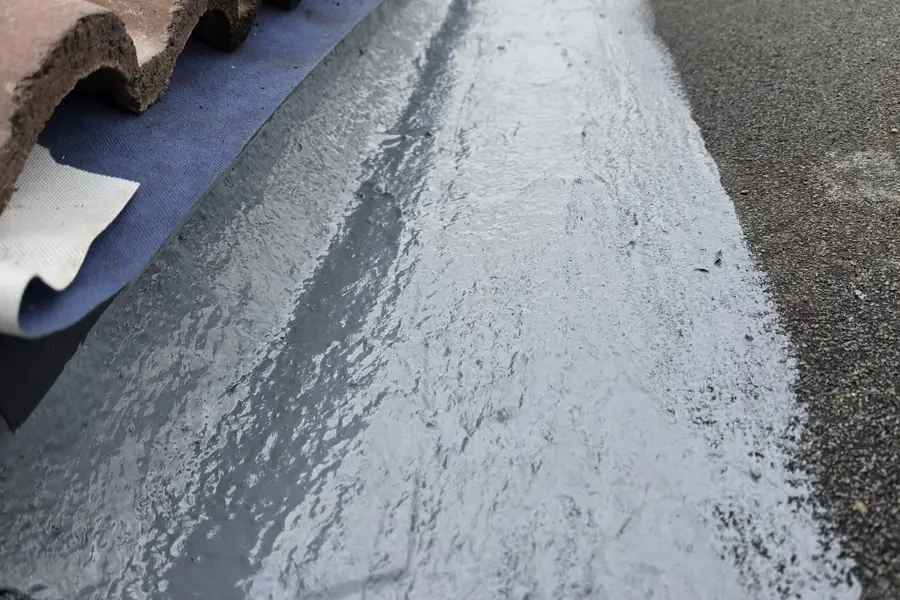
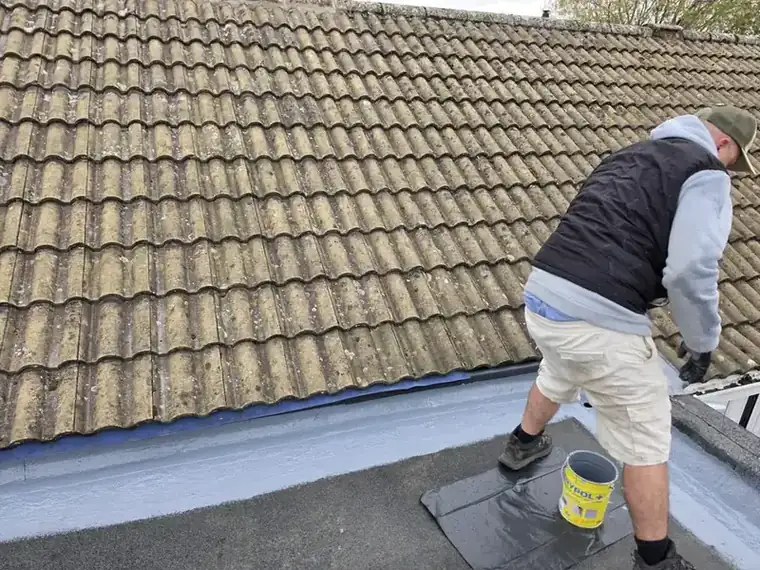
| Patch repair to a felt roof on a back extension | £200 - £480 |
| Single garage re-roofed in EPDM rubber | £1,300 - £2,200 |
| Emergency tarpaulin after storm damage | £150 - £350 |
| Scaffold to one elevation, licence included | £600 - £1,150 |
Where a house fronts straight onto the pavement, any scaffold needs a licence from Flintshire as highway authority, which adds cost and a few days' wait. Slate is the other thing to budget for. Matching the slate on a Victorian terrace sometimes needs reclaimed stock, while concrete tiles for a 1970s estate house are usually still made and easy to get hold of.
Welsh Rules That Change the Answer on Deeside
Flintshire County Council handles both planning and building control for all three towns. For ordinary repairs you won't deal with either. The point where building control gets involved is a larger re-covering job, roughly a quarter of the roof area or more, and our Saltney, Broughton and Hawarden roof repair guide goes through that threshold and the planning side. The rules that matter more on Deeside are the ones about who owns a roof and who has to pay to fix it.

Renting in Wales
Plenty of Shotton's terraces are rented, and since 1 December 2022 Welsh tenancies have run under the Renting Homes (Wales) Act 2016, not the English system. Tenants are now "contract-holders", and section 92 of the Act requires the landlord to keep the structure and exterior in repair, including drains, gutters and external pipes. The Welsh Government's fitness for human habitation guidance for landlords lists damp as a fitness matter and tells landlords to check roof tiles and slates and keep the outside of the building in good enough repair to stop rain getting in. Once a landlord knows about a fault, it has to be fixed within a reasonable time, and the landlord can't charge the tenant for a repair the tenant didn't cause.
If you're a landlord with a terrace or an HMO in Shotton or Connah's Quay, a slipped slate isn't something to leave until the tenancy ends. Get it reported, photographed and fixed.
Former council houses
Right to Buy ended in Wales on 26 January 2019, while England still has it. On the postwar estates around Connah's Quay, that left a fixed mix of owner-occupied and council homes, often within a single terrace. If you own your house, the roof is yours to maintain, even if the house next door is still the council's. Where a repair crosses the party line, such as a shared ridge or a stack serving both houses, talk to the council before the work starts so both halves can be done properly. If you're a council tenant, report roof faults to Flintshire's housing repairs line instead of booking a roofer.
Roof Repairs in Connah's Quay, Shotton and Queensferry: Questions We Get Asked

My rented house in Shotton has a leaking roof. Who has to fix it?
Your landlord. Under the Renting Homes (Wales) Act 2016, which has applied since 1 December 2022, a landlord must keep the structure and exterior in repair, gutters and external pipes included, and must do the work within a reasonable time of finding out about it. Report the leak in writing and keep a copy. If you rent from Flintshire County Council, report it to the council's housing repairs team rather than calling a roofer yourself.
Does living in a flood zone near the Dee change anything about a roof repair?
Not for the repair itself. Flood zones matter for planning applications, such as a new extension, and for insurance. Where they do touch the roof is drainage: a low-lying house has nowhere for water to go when heavy rain coincides with a high tide, so blocked gutters and undersized downpipes cause more trouble there than on higher ground.
I bought my council house in Connah's Quay years ago. Can the council still sort out the roof?
No. Once you bought it, the roof became yours to maintain. Right to Buy ended in Wales on 26 January 2019, so these houses are now a fixed mix of owner-occupied and council homes, and on a terrace your neighbour's half of the roof may still belong to the council. If a repair runs across the party line, speak to the council's housing team before any work starts.
How much do roof repairs cost in Connah's Quay, Shotton and Queensferry in 2026?
Most jobs we price on Deeside cost between £180 and £1,200. Refixing a few slipped concrete tiles is around £180 to £400, rebedding a ridge with a cracked tile replaced £350 to £800, and new lead flashing around a chimney £400 to £900. Scaffold, where a job needs it, adds about £600 to £1,150.
Book a free roof inspection in Connah's Quay, Shotton or Queensferry