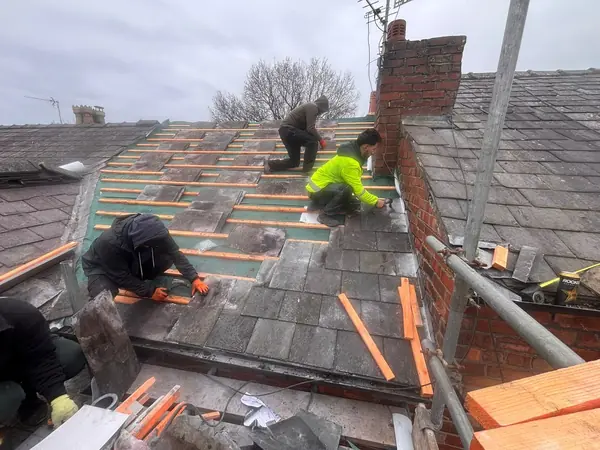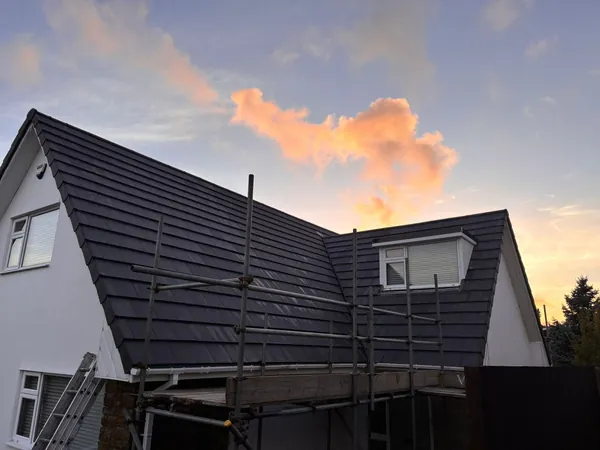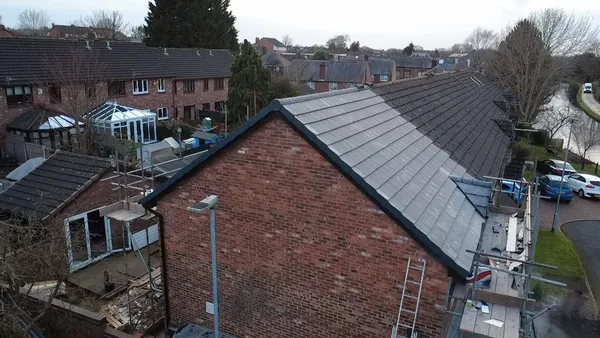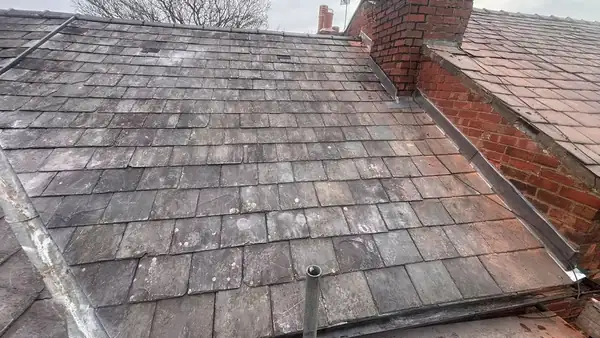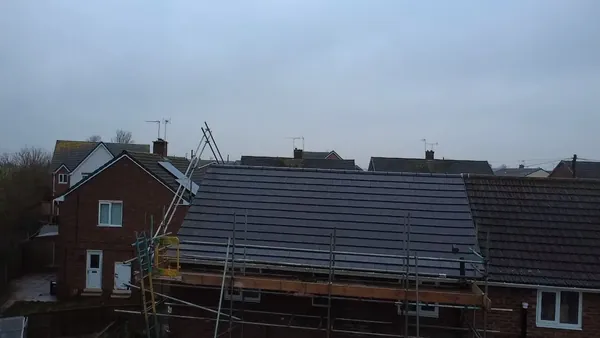
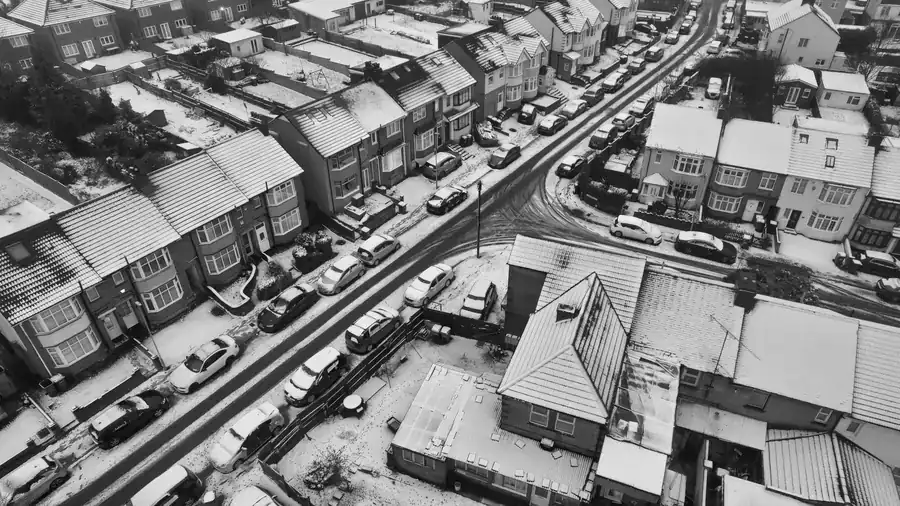
On a lot of streets in Blacon and the Lache you can pick out the bought houses from the rented ones by looking up. One half of a semi has a crisp new roof and a plastic dry verge, put on in a landlord's programme. The other half still has the concrete tiles it was built with, a ridge held on by tired mortar and a gable edge that sheds grit every winter. Roof repairs in Blacon, Lache and Westminster Park usually come back to that split. Most of Blacon went up after 1945, with 684 houses approved in 1949 alone. The Lache council estate was started in 1931. The private semis around Westminster Park mostly date from the late 1950s and early 1960s. In 2026 the common repairs on these roofs cost roughly £150 to £900, scaffolding comes on top of that for anything at ridge height, and the planning authority for all three is Cheshire West and Chester Council.
Start With Who Owns the Roof
Before you get a single quote, work out whose roof it is, because on these estates the answer isn't always you. If you rent from a housing association, the roof is the landlord's job. Report the leak to them, take photos, keep a note of the date, and don't pay a roofer yourself unless they agree to it in writing.
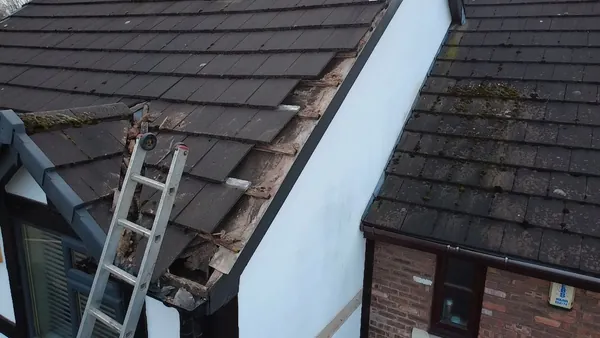
If you bought the house, whether under Right to Buy or later from someone who did, the roof is all yours. The government's guide to buying your council home under Right to Buy covers the purchase side, but the practical upshot for a house is simple: once the sale completes, every slipped tile and leaking flashing is your bill. A flat is different. If you own a leasehold flat in one of the low-rise blocks, the freeholder normally keeps the roof and recharges the cost through the service charge.
Owners of semis and terraces have a third thing to think about, which is the neighbour. The ridge, the chimney and sometimes a gutter run straight across the party line. For the repairs we carry out on all kinds of Chester houses, our roof repairs page lists what's covered. The rest of this guide looks at how these three areas were built and what that means when something goes wrong.
Blacon: Shallow Pitches Facing the Welsh Border
Blacon was farmland on the city's western edge until after the Second World War. A few groups of private houses had gone up near the old station in the late 1930s, along Highfield Road, St Chad's Road and Saughall Road, but the council estate itself was developed entirely after 1945. Temporary homes came first in 1946. The main build was approved in 1949, centred on Blacon Avenue, and work carried on through the 1950s. In the early 1960s the estate pushed north along Stamford Road and Hatton Road, two 12-storey blocks went up in the southern neighbourhood, and the 1970s added short terraces of mixed construction. By about 1980 it was full.
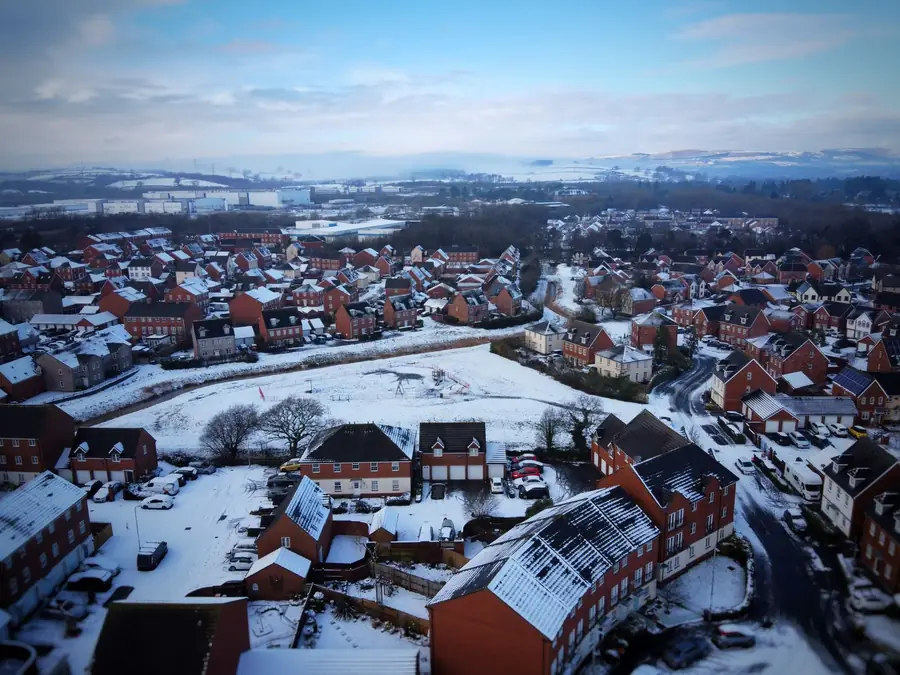
The Victoria County History describes most of Chester's postwar council houses as plain brick, in terraces or semi-detached pairs, with shallow-pitched roofs. That low pitch matters more than any other detail. Rain runs off a shallow roof slowly, and a westerly gale coming in over the flat ground towards Sealand can push water uphill under the laps of the tiles. On a steep roof the same storm would barely register. On a 1950s Blacon semi it finds any gap in tired felt.
What we'd expect to find on an original or early re-roofed Blacon house:
- Gable verges where the mortar has cracked away, leaving the end tiles loose. This is the most common call on exposed estates.
- Bitumen felt at the eaves that has gone brittle and sagged, so the water it should carry into the gutter drips onto the fascia instead.
- Ridge tiles bedded in sand and cement, rocking in places.
- Flat-roofed porches, canopies and back extensions leaking well before the main roof does.
The 1970s terraces are worth a separate look, because "mixed construction" can mean tile-hung fronts, felted flat sections and junctions the original builder didn't detail very well. Get the roofer to say exactly which part is leaking before agreeing to a big job.
Lache and Westminster Park: Three Generations in a Mile
Lache is older than most people assume. Chester's council began the Lache estate in 1931 as a southward extension of its Buddicom Park garden suburb, setting houses at angles on corners and around a green at Clover Lane and Sycamore Drive. Over 1,000 tenants from cleared streets in the city centre were rehoused there during the 1930s. Private houses of about the same age faced the estate across Circular Drive. From 1935, builders put up better-quality detached and semi-detached houses on a grid between the estate and Lache Lane, including Lache Park Avenue and Marlston Avenue.
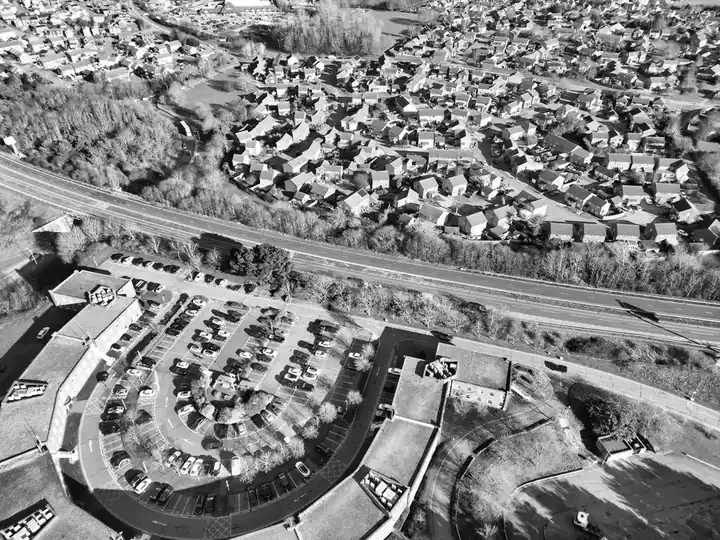
After the war the area kept filling in. The Lache Hall estate, a private middle-income scheme, started in 1959 south of Circular Drive. Another estate was approved in 1966-7 between Lache Lane and Wrexham Road, with its parade of shops on Five Ashes Road, and a small council site off Willow Road followed in the late 1960s or early 1970s. The residential streets beside Westminster Park, the big public park that gives the area its name, belong to the same period. Oldfield Crescent, Snowdon Crescent and Clifford Drive were laid out around 1960-2, and most of the houses on Clifford Drive date from about 1958.
So within a mile you can have a 90-year-old council house, an interwar private semi and a late-1950s semi. The 1930s houses are the ones to watch at the ridge and hips. Mortar bedding that old often lifts out by hand, and if the roof still has its original tiles, the nibs that hook them onto the battens may have crumbled. Many have been re-roofed at some point, so check what you actually have before assuming. The Westminster Park semis are usually simpler: concrete tiles, a gable or hip, and problems that start at the edges, the same as Blacon but with a bit more shelter from trees and the park.
Right to Buy Roofs: Repairing One Half of a Shared Ridge
This is where the ex-council houses in all three areas get awkward. Social landlords tend to re-roof in batches, a whole street or block at a time, skipping the houses that were sold. That leaves owner-occupied houses sitting between newer roofs, sometimes with a different tile profile on each side of the party wall.
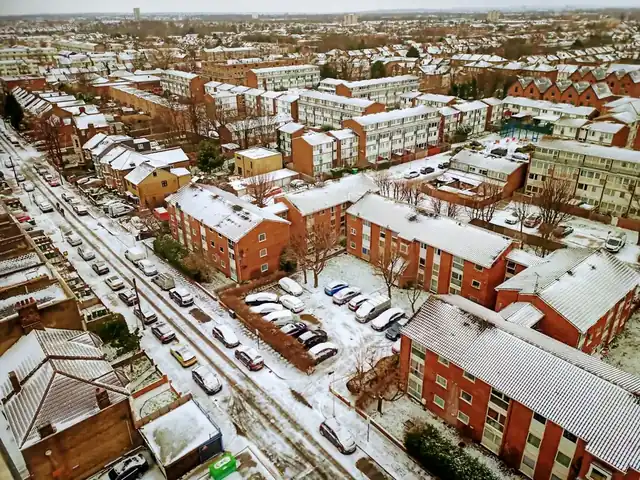
The weak spot is the joint. Where an old concrete tile meets a newer one at the party line, the two rarely interlock properly, and the ridge has to bridge the change. Ask your roofer to look at that junction even if the leak seems to be somewhere else. If you're re-roofing your half, talk to the neighbour or their landlord first. A clean party-line detail is much easier to get with a bit of co-operation, and the scaffold can sometimes be shared.
Flats are their own case. In the low-rise blocks, roof work usually goes through the freeholder, and leaseholders pay their share. Our guide to roof repairs on flats in Chester and who pays for them explains the consultation rules if you've been handed a big bill.
Concrete Tiles: The Tile Survives, the Edges Don't
Concrete interlocking tiles were the standard choice for postwar estate building, and they are close to indestructible. They go rough, grow moss and fade from red or brown to a dull grey. Crack one, though, and it's usually because someone stood on it. So when a roofer says the tiles are fine but the roof still needs work, they aren't contradicting themselves.
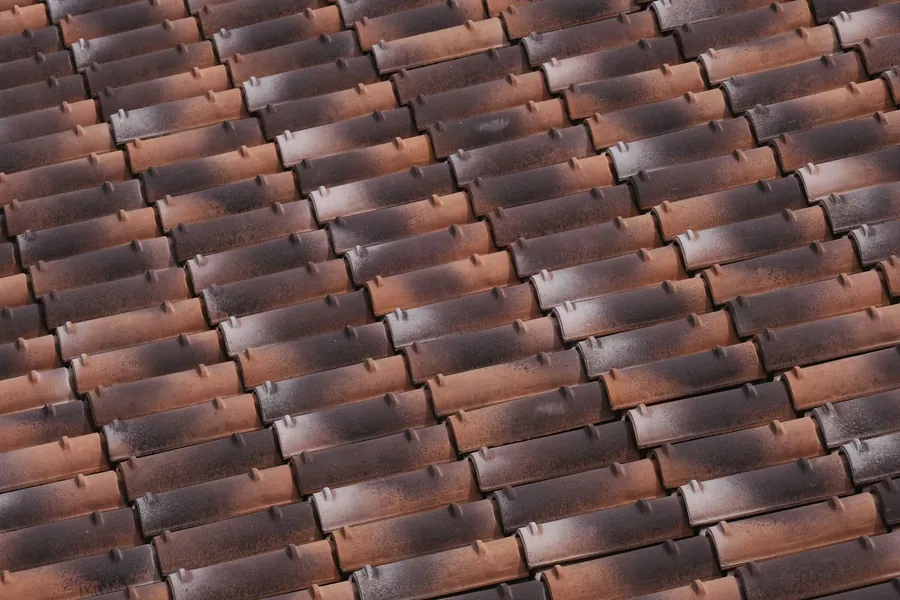
Start at the gable ends. The mortar along a verge cracks, bits of it turn up in the flower bed, and eventually the end tiles lift in a gale. Re-pointing buys a few years. A mechanical dry verge fixes it properly, and our post on dry verge and dry ridge systems in Chester goes through the options and prices. The ridge and hips have the same mortar problem at the top of the roof, with the added worry that a loose ridge tile is a heavy thing to have fall two storeys onto a path.
Then look at the eaves. Old bitumen felt rots exactly where it laps into the gutter, so you get stained fascias or water running down the brickwork behind the downpipe. Plastic eaves trays slid under the bottom course often sort it out for a few hundred pounds.
The underlay is the expensive one. If the felt has failed right across a slope, you'll see daylight or damp patches from inside the loft, and patching the edges won't stop it. That's the point to start talking about a re-roof.
Matching is usually less of a headache than on slate. Several of the classic concrete profiles are still made, and when one has been discontinued, reclaimed concrete tiles are easy enough to find in the North West.
What Roof Repairs Cost in Blacon, Lache and Westminster Park in 2026
These are rough 2026 figures for a two-storey semi or terrace. Access is the big variable. Ladder work on a porch is cheap, while anything along the ridge or a gable top usually needs scaffolding, which on a typical semi adds about £500 to £1,200.
- A few slipped or cracked concrete tiles replaced: about £150 to £350
- Dry verge fitted to one gable: about £150 to £400, or £300 to £800 for both ends
- Ridge re-bedded in mortar: about £300 to £750; dry ridge instead: about £450 to £900
- Eaves felt and trays renewed along one elevation: about £250 to £600
- Lead flashing renewed around a chimney: about £400 to £900
- Flat porch or canopy re-covered: about £350 to £900
- Flat garage roof re-covered: about £900 to £2,000
- Full re-roof of a three-bedroom semi in concrete tiles: about £5,500 to £9,000
From the jobs we handle on Chester's postwar estates, the verges, ridge and eaves come up far more often than the tiles themselves. That's why a quote that only says "roof repair" isn't good enough. It should name the part of the roof, the method (mortar or dry-fix), the scaffold cost and how the party-line joint will be handled if you're in a semi.
Planning, Building Regulations and Cheshire West and Chester Council
Cheshire West and Chester Council is the planning authority for Blacon, Lache and Westminster Park, and its planning and building control pages are where you check anything you're unsure of. None of the three areas is on the council's list of Chester conservation areas, which covers places like Curzon Park, Handbridge, Hoole Road and the city centre. For most owners that means repairs and like-for-like re-roofing don't need planning permission at all.
Building Regulations are a different matter. Strip and re-cover more than a quarter of the roof and it counts as renovating a thermal element, so the insulation rules apply and the work has to be signed off by building control or by a roofer registered with a competent person scheme. A switch to heavier tiles also needs the roof structure checked. Ask whoever quotes for a re-roof how they'll handle the sign-off.
One more check on the older garages and outbuildings around these estates: corrugated sheet roofs from the postwar decades are sometimes asbestos cement. It's usually low risk left alone, but it shouldn't be drilled, cut or broken up without knowing what it is. The Health and Safety Executive's asbestos guidance explains what homeowners need to know.
Frequently Asked Questions About Roof Repairs in Blacon, Lache and Westminster Park
I bought my Blacon house under Right to Buy. Is the roof my responsibility now?
Yes. Once you own the freehold of a house, all repairs are yours, including the roof. Your neighbour's half of a shared ridge or chimney is their responsibility, or their landlord's if they still rent. If you own a leasehold flat, the freeholder normally looks after the roof and recharges leaseholders through the service charge.
Do I need planning permission to re-roof in Blacon, Lache or Westminster Park?
Usually not. None of the three areas is a conservation area, so repairs and re-roofing in similar materials normally need no planning application from Cheshire West and Chester Council. Building Regulations still apply if you re-cover more than a quarter of the roof, so the work needs signing off by building control or a registered competent person.
How much does a roof repair cost on an ex-council semi in Chester?
In 2026, replacing a few concrete tiles costs about £150 to £350. Fitting a dry verge is about £150 to £400 per gable, and re-bedding the ridge about £300 to £750. Scaffolding for ridge or gable work usually adds £500 to £1,200. A full re-roof of a three-bedroom semi in concrete tiles is roughly £5,500 to £9,000.
Why is mortar falling out of the gable edge of my roof?
The mortar along a verge takes the full force of the weather, and on the shallow-pitched roofs common on Chester's postwar estates it cracks and washes out after a few decades. Once it goes, the end tiles can lift in strong wind. Re-pointing is a short-term fix, while a mechanical dry verge clips the tiles in place and doesn't rely on mortar.
Ask for a roof repair quote in Blacon, Lache or Westminster Park