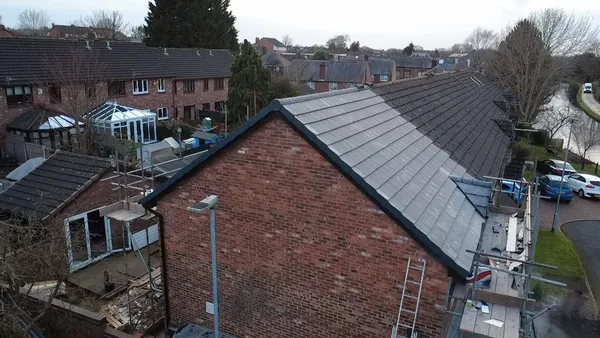
Head out of Chester towards the A41 and the River Dee and within a few miles you reach three villages that were shaped by one landowner, a canal and, oddly, the army. Aldford was rebuilt almost from scratch in the middle of the nineteenth century by the Grosvenors, whose Eaton Estate still wraps around it. Saighton, a parish of 202 people at the 2011 census, is still mostly estate-owned. Waverton, with 1,587 residents in the same count, is the odd one out: an old canal village that spread outwards through the twentieth century. All three are conservation areas, and between them they hold 58 listed buildings. That background shapes roof repairs in Waverton, Aldford and Saighton more than the weather does. It decides who pays for the work, what the roof is covered in and whether the council needs to hear about it first. This guide takes the villages one at a time, then covers the rules and what repairs cost in 2026.
Roof Repairs in Waverton, Aldford and Saighton: Start With Who Owns the Roof
In most of Chester the person who rings a roofer owns the house. Around Aldford and Saighton that isn't a safe assumption. Most of the land and buildings in Saighton belong to the Duke of Westminster's Eaton Estate, which the Grosvenor family has held since the 1440s, and a good share of Aldford's cottages were built by the estate for its own tenants.
If you rent one of those cottages, read your tenancy agreement before anything else. On most residential lets in England the landlord is responsible for the structure and outside of the house, roof included, and the estate will have its own way of handling repairs. Report a leak in writing, take photos of any damp patch and let the landlord send its contractor. Paying a roofer yourself can leave you out of pocket for work that was never yours to fund.
If you own the house outright, the roof is yours, and the rest of this guide is about getting the repair right. Our roof repairs service covers all three villages along with the rest of the Chester area.
Aldford: Diaper Brick, Douglas Gables and Two Kinds of Roof
Aldford looks the way it does because Richard Grosvenor, the 2nd Marquess of Westminster, rebuilt it in the mid-1800s. His architect for both St John the Baptist's Church, finished in 1866, and many of the houses was John Douglas, the Chester architect whose red brick, black-and-white gables and tall chimneys turn up all over the Eaton Estate. The village has 26 listed buildings. The only Grade I entry is the cast-iron bridge over the Dee, designed by Thomas Telford and built by William Hazledine in 1824.
What matters for a repair is that the estate never settled on one roof covering. The listing descriptions record slate on Vine Cottage and Smithy Cottage from about 1863, on the church and on 1 and 2 Church Lane. They record tiles on Rushmere View from 1874, on the hipped roof of Aldford Hall farmhouse from 1876 to 1881, and on Brook View and Nurses' Cottage from 1893. The Old Rectory of 1897 is in Westmorland slate. Two of the oldest cottages are still thatched, and that's a job for a thatcher, not a roofer.
Several of these houses have blue brick laid in diamond patterns across red brick walls, known as diapering, plus half-timbered gables and chimney stacks built tall to look good from the lane. Each of those features is a place where a roof can fail. Lead has to step neatly up a tall stack, timber gables need their bargeboards kept sound, and a broken tile on a Douglas roof has to be matched in size, colour and curve, not swapped for whatever the merchant has in stock.
Waverton: Church Cottages, Canal Bridges and a Twentieth-Century Village
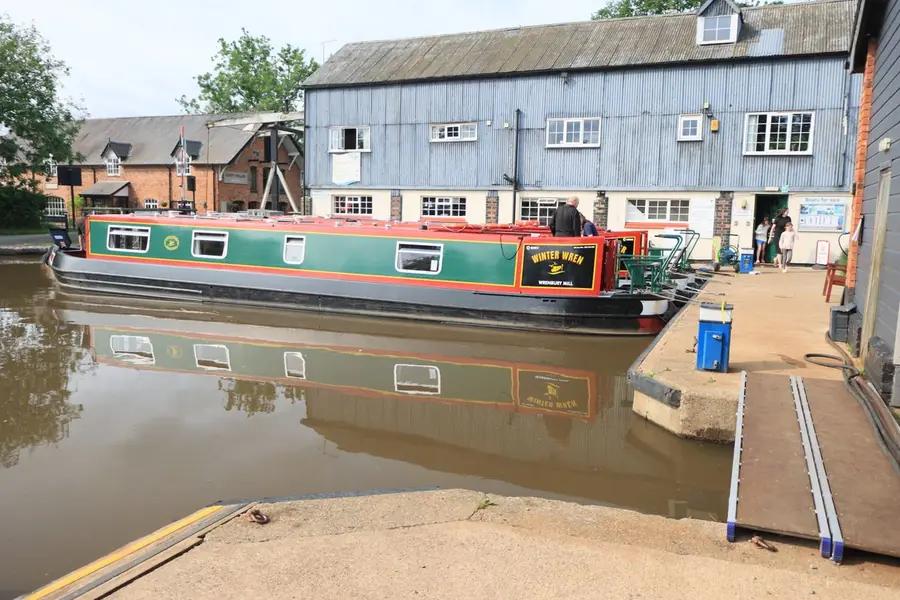
Waverton grew up around St Peter's Church and the Chester Canal, now the Shropshire Union, which still runs through the middle of the village. Three of its canal bridges, built around 1776 to designs by Samuel Weston, are listed. So is the church, whose nave roof has been dated to 1665 and which John Douglas restored in 1888.
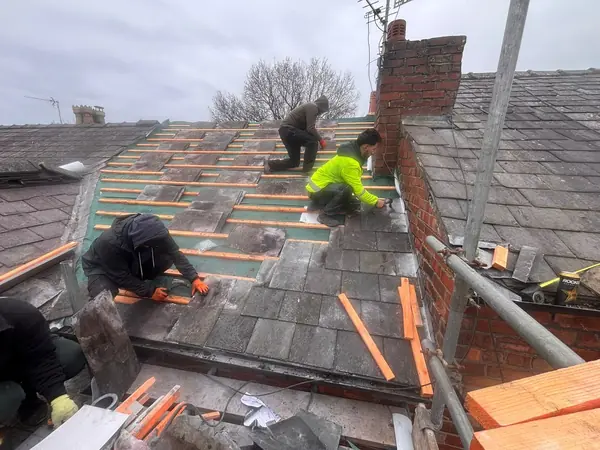
The older buildings are a slate-and-tile mix again, but a different one from Aldford's. Church Cottages, built in stages between 1855 and 1865, are roofed in Welsh slate. The church and the 1897 station building, now a bus depot, carry Lakeland slate. Douglas's school of 1877 and Church House Farmhouse of 1882 to 1883 have red tiled roofs. On cottages from the 1850s and 60s, the slate itself often outlasts the nails holding it, so slates start sliding one by one long before the roof is worn out.
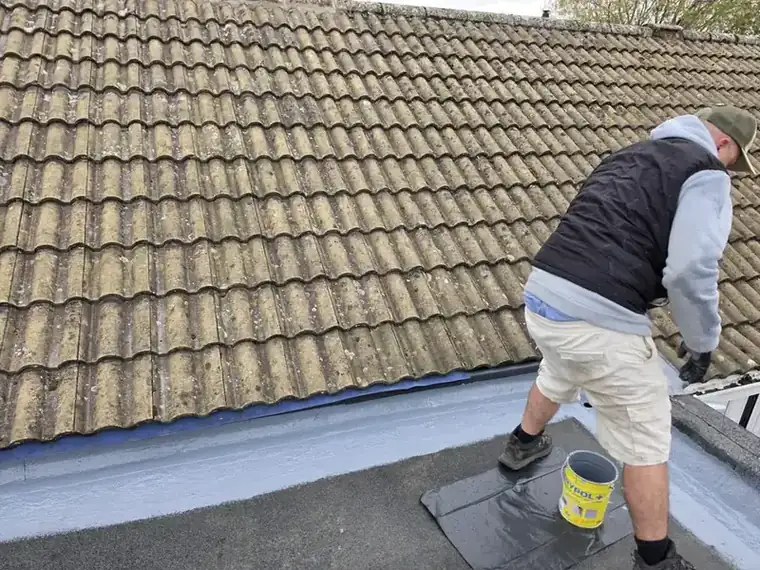
Most houses in Waverton are much younger than that. New housing grew the village a great deal in the twentieth century, and those homes mostly have concrete interlocking tiles on trussed rafters, often with a flat-roofed garage or extension added later. Their faults are the ordinary ones: ridge and verge mortar that has crumbled, felt at the eaves that has gone brittle, and leaks where a flat roof butts up against a brick wall.
Saighton: A Medieval Gatehouse, an Estate Farm and the Old Army Camp
Saighton is tiny, but its buildings span five centuries. The gatehouse of Saighton Grange dates from 1490 and was built for the abbey at Chester. It is the parish's only Grade I building and now stands at the entrance to Abbey Gate College, which opened as a school in 1977. Behind it, the main house went up in 1861 to designs by Edward Hodkinson and was later altered by John Douglas. A three-stage sandstone water tower from about 1870 stands nearby.
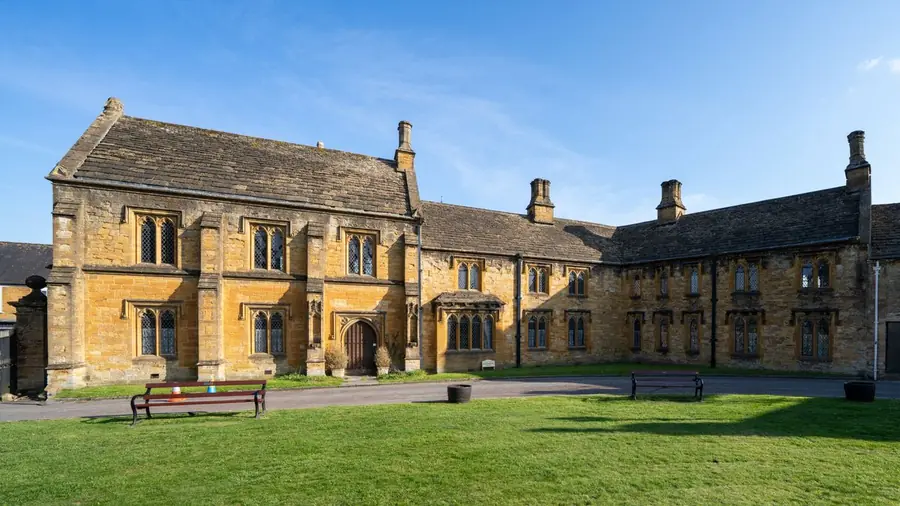
The rest of the parish is estate building too. Saighton Lane Farm was built as a model farm in 1888 to 1889 by Douglas and Fordham, the village school of 1872 has a red tile roof, and Saighton Hall, the Old Vicarage and Elm House are all recorded with slate. In total the old parish has 15 listed buildings, including St Mary's Church at Bruera.
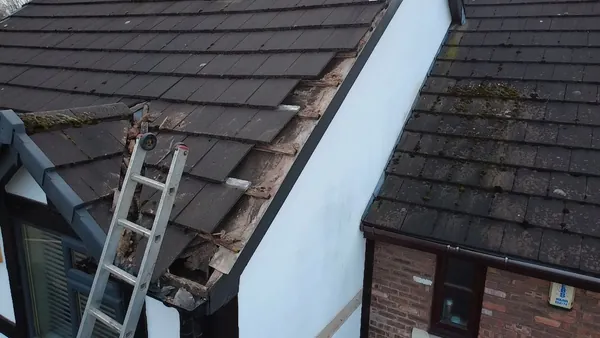
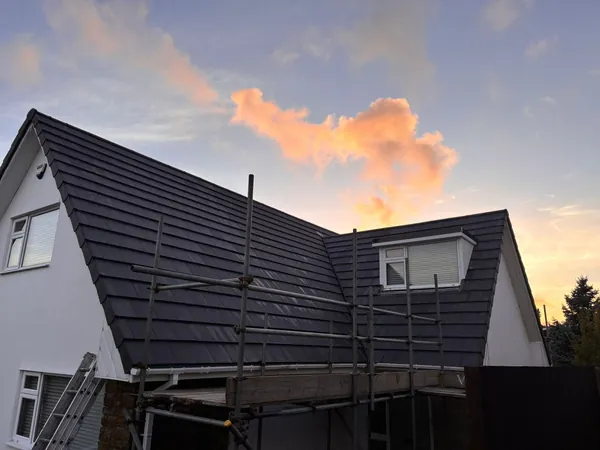
Saighton Camp is a different story. It sits between Saighton and Huntington and was built for the War Office in 1938 and 1939, then used as a training centre for the Royal Army Medical Corps and closed around 1999. In the 2010s the site was redeveloped as housing, with street names such as Wellesley, Alanbrooke and Dragoon. Those roofs are barely a decade old, so the problems are usually installation faults rather than age: dry verge caps that pop off in wind, ridge units missing a clip, a vent tile fitted the wrong way. If your house is still within a new-home warranty, check what that covers before you pay for a repair.
Matching Slate and Tile on Estate-Built Houses
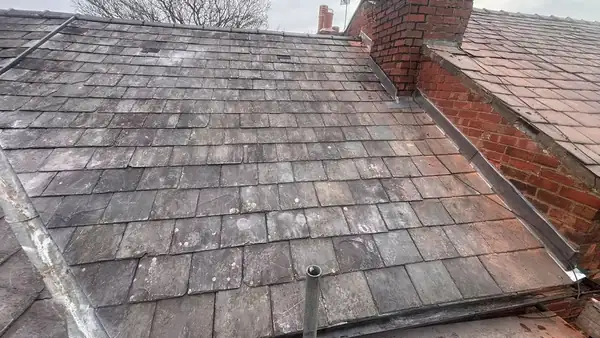
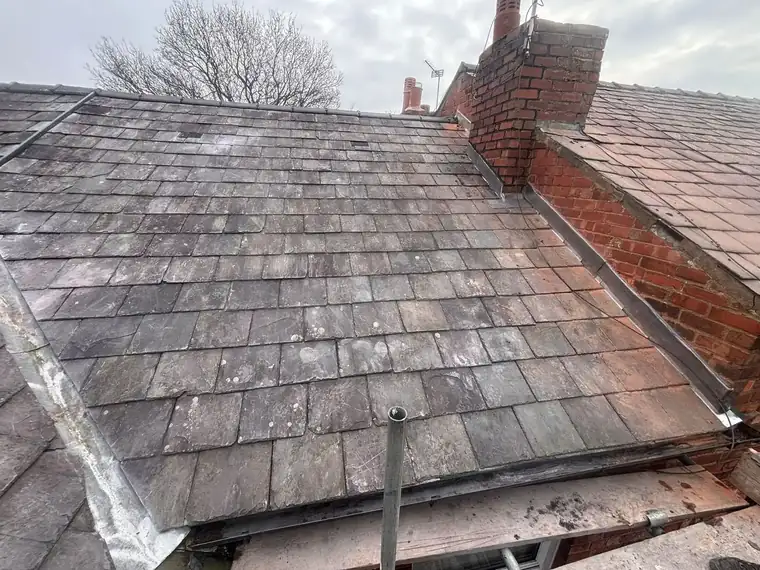
This is the fiddly part of village roofing. Welsh slate and Lakeland slate look very different side by side. Welsh slate is thin, regular and blue-grey to purple. Lakeland slate is thicker and greener, and it is often laid in diminishing courses, with big slates at the eaves getting smaller towards the ridge. Patching one with the other, or with a cheap imported slate, stands out from the road and can let water in where the thicknesses don't line up.
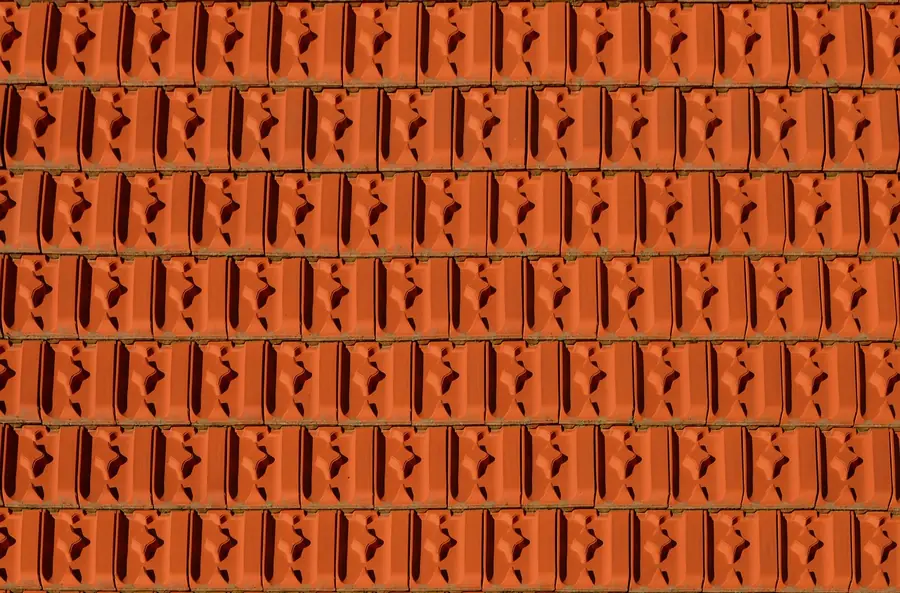
Red clay tiles bring the same problem. Before ordering anything new, we look for reclaimed tiles of the same size and colour, and on a slope with a few broken ones it's often better to strip sound tiles from a hidden back slope to repair the front. Fixings matter too. Copper nails or stainless hooks last far longer than the iron nails that failed in the first place.
Chimneys need the same care. Brick stacks of this age were built with lime mortar, which is softer than the brick so it takes the weathering instead. Repointing them in hard cement mortar traps moisture in the brick and can make the faces flake off. If a stack needs repointing, it should be lime. East of the city the stock is different again, and our guide to roof repairs in Great Boughton, Vicars Cross and Christleton covers the slate cottages and 1960s estates there.
Three Conservation Areas Without a Published Appraisal
Cheshire West and Chester Council's conservation areas page lists 96 conservation areas across the borough, Aldford, Waverton and Saighton among them, along with Eaton next door. None of the three has an appraisal or boundary map published there. The council asks people to email its conservation and design team for details, and that's worth doing before you plan anything bigger than a straightforward repair.
A like-for-like repair rarely needs permission. Refixing slipped slates, rebedding a ridge or renewing lead in the same material leaves the roof looking as it did, and the Planning Portal's guidance on roofs explains where the line falls. Things change if the work alters how the house looks. Swapping slate for concrete tiles, putting rooflights on a slope that faces the road or taking down a chimney are all worth checking first, and some conservation areas also have Article 4 directions that remove householders' usual permitted development rights.
Listed buildings are stricter. Changing a listed roof in a way that affects its character needs listed building consent, and carrying out that work without consent is a criminal offence. That can include replacing handmade tiles with machine-made ones. You can check whether your house is listed on Historic England's National Heritage List search. Plenty of people assume a house in a conservation area is listed, or the other way round, and they're two separate things.
What Roof Repairs Cost in Waverton, Aldford and Saighton in 2026
These are guide prices for 2026, VAT included, for typical village houses. Access moves the price more than anything. A cottage with a tall decorative stack or a gable hard against a lane needs more scaffold than a modern semi on an estate close.

| Job | 2026 guide price |
|---|---|
| Refix up to eight slipped Welsh slates on hooks or tingles | £160 - £380 |
| Replace broken red clay tiles from reclaimed stock | £220 - £550 |
| Relay a section of Lakeland slate in diminishing courses | £450 - £1,200 |
| Rebed or repoint a ridge in mortar | £320 - £780 |
| Renew lead flashings around one tall chimney stack | £450 - £1,050 |
| Repoint a brick chimney stack in lime mortar | £400 - £950 |
| Repair or replace a bargeboard on a timber gable | £300 - £850 |
| Fit a dry verge to one gable of a newer house | £300 - £600 |
| Re-cover a flat-roofed garage in EPDM rubber | £1,200 - £2,100 |
| Scaffold to one elevation | £550 - £1,100 |
| Scaffold for a tall stack or full elevation of a period cottage | £900 - £1,800 |
Listed buildings cost more. Sourcing matching slate or tile takes longer, traditional methods are slower and consent adds weeks before work can start. A quote should say which material is going back on, where it is coming from and whether scaffold is included.
Waverton, Aldford and Saighton Roof Questions

I rent a cottage from the Eaton Estate. Should I book a roofer myself?
Not before you've checked your tenancy agreement. On most residential lets in England the landlord is responsible for the roof and the outside of the house. Report the problem to the estate in writing, with photos, and let it arrange the repair. If you pay a roofer yourself, you may not get the money back.
Is my house inside the Waverton conservation area?
Waverton is on Cheshire West and Chester Council's list of conservation areas, but the council hasn't published an appraisal or boundary map for it online. Email the council's conservation and design team at [email protected] to check. A like-for-like repair rarely needs permission either way, but changes to how the roof looks may.
My house is on the former Saighton Camp site. Why is the roof already giving trouble?
The houses there were built in the 2010s, so the roof covering is nowhere near worn out. Early problems are usually installation faults, like dry verge caps coming loose, missing ridge clips or badly fitted vent tiles. Check whether a new-home warranty still covers the roof before paying for a repair.
How much do roof repairs cost in Waverton, Aldford and Saighton in 2026?
Most jobs fall between £160 and £1,200. Refixing a few slipped slates is about £160 to £380, rebedding a ridge £320 to £780 and new lead around a tall chimney £450 to £1,050. Scaffold adds £550 to £1,100 for one elevation, or up to £1,800 for a tall stack on a period cottage. Listed buildings cost more.
Ask for a roof repair quote in Waverton, Aldford or Saighton