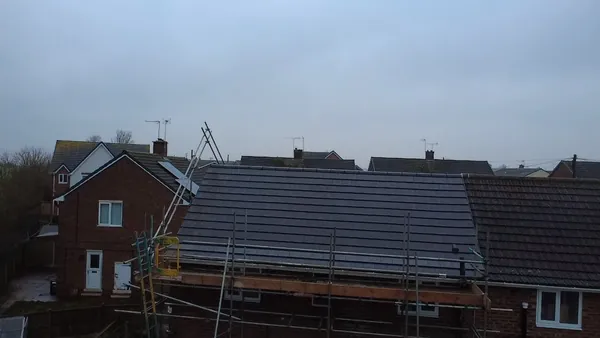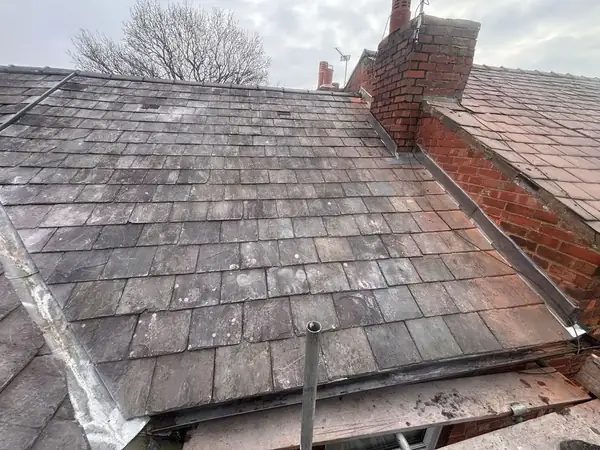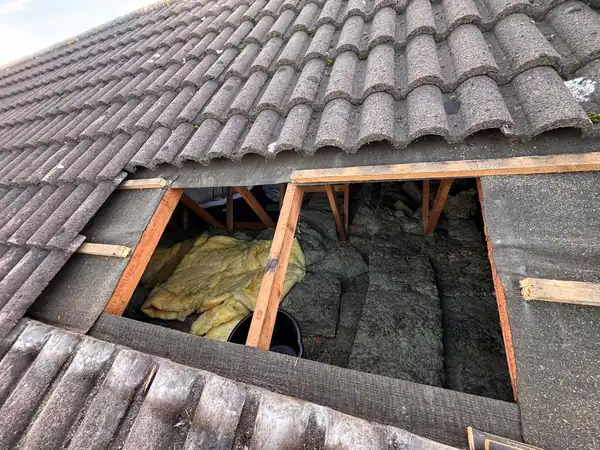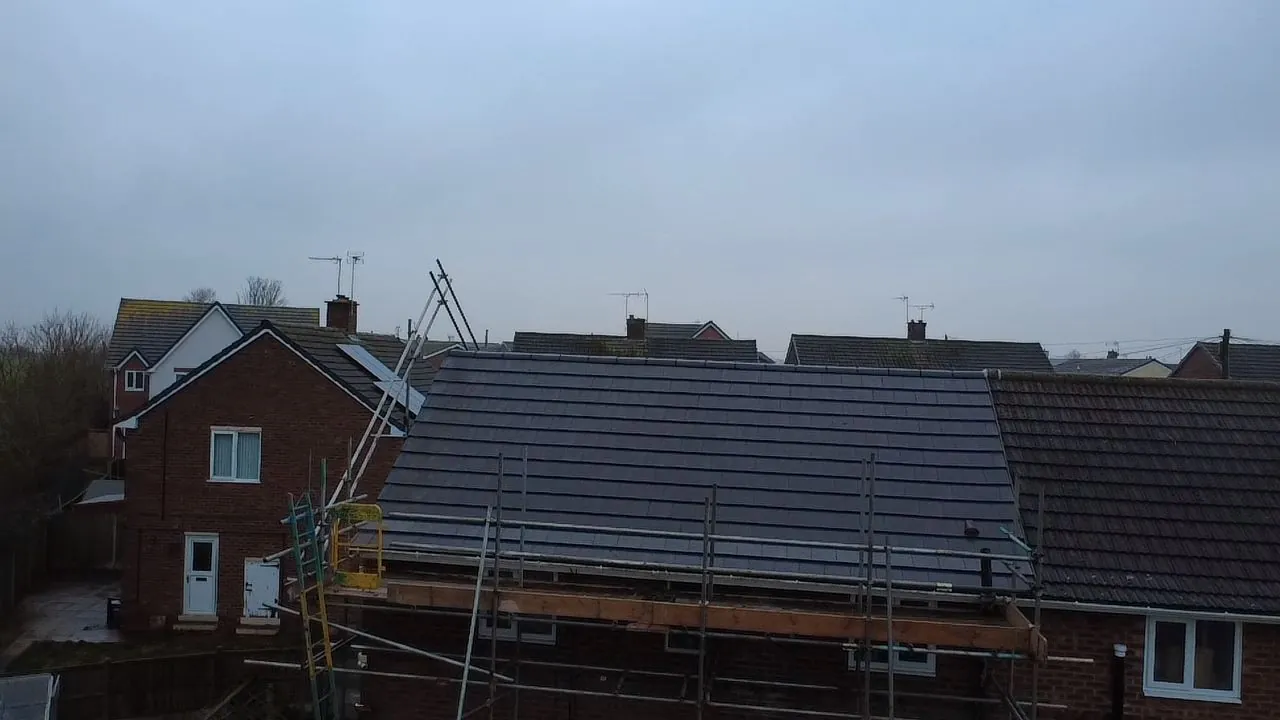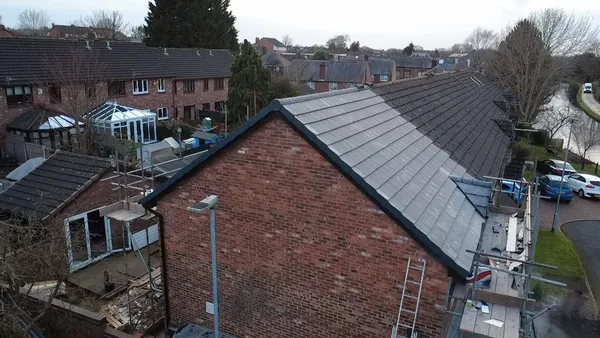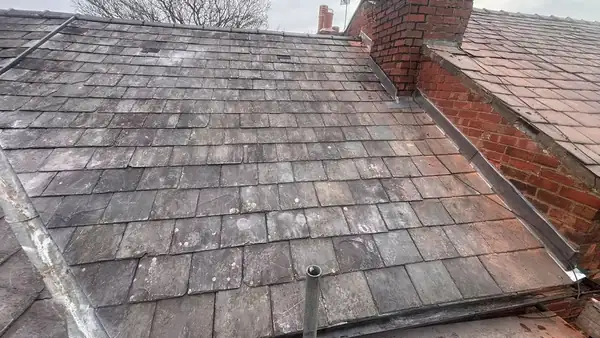
Ask how long a roof replacement takes in Chester and you'll usually get one number back. The honest answer has two: the roofers are on your house for anywhere from four working days to six weeks, and the paperwork, materials and scaffold booking before that can add another month. Which end you land at depends much more on the kind of house than on its size. A two-up two-down in Hoole with its front door on the pavement can take longer to get started than a detached bungalow takes to finish. Weather matters too, mostly between October and February. The Met Office's long-term averages for Hawarden Airport, just over the Welsh border, show about 729mm of rain a year, well under the UK average, but it still falls on around 137 days, and in November it's nearer one day in two. Add 13 conservation areas within the city, Victorian slate that is getting harder to match and the odd rotten rafter, and a quote with no timeline on it tells you very little. Below are realistic schedules for four Chester house types, then what stretches them.
Before Day One: Why a Roof Replacement in Chester Starts Weeks Ahead
The clock starts when you accept a quote, not when the scaffold goes up, and on most Chester jobs there's a gap of two to six weeks between the two. Part of that is just the roofer's diary. The rest is lead time on things that have to be in place before anyone strips a slate.
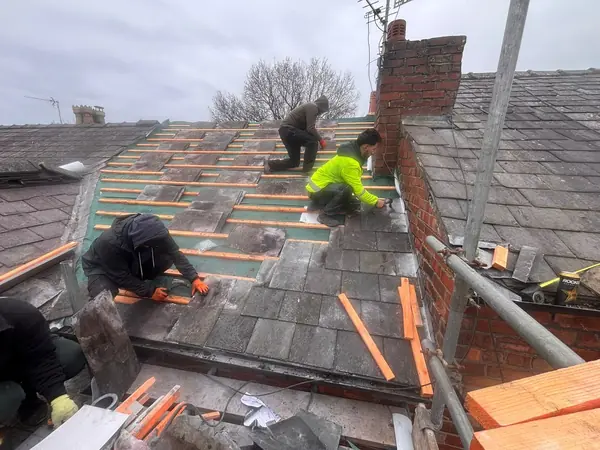
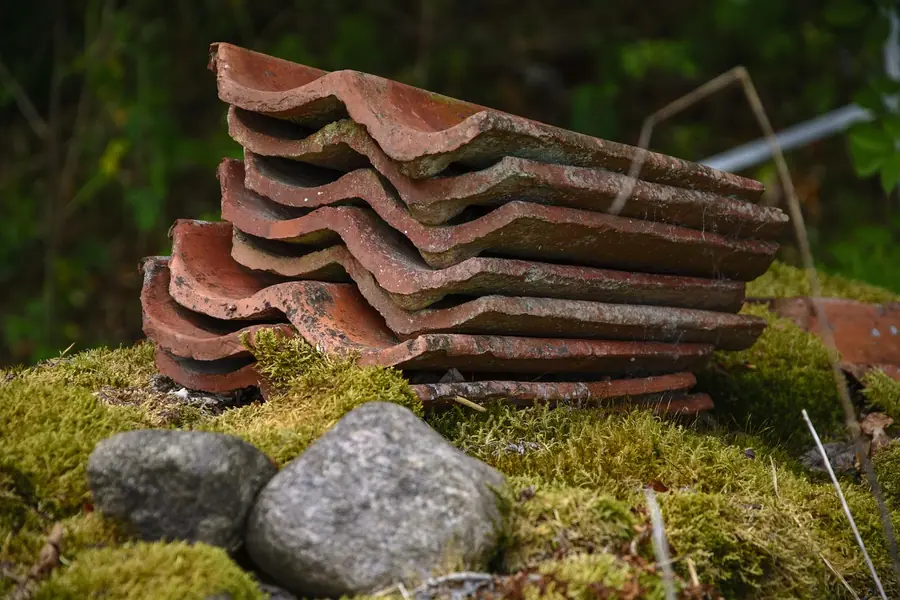
Materials come first. New concrete or clay tiles are usually on a merchant's shelf and arrive within a week. New natural slate can take longer, and reclaimed slate in a particular size and colour can take several weeks to track down, so it should be ordered and on site before the old roof comes off. Then there's the scaffold. If any part of it will stand on the pavement or the road, it needs a licence from Cheshire West and Chester Council, and the council's page on scaffolding licences on the highway makes it clear that the contractor doing the work applies for it, not you. On a terrace or semi, it's also worth talking to your neighbour early about the shared ridge and chimney.
Our page on roof replacement in Chester explains what a full strip and re-cover includes. The schedules below assume that work, with Building Regulations sign-off handled by the roofer.
A Victorian Terrace in Hoole: Seven to Ten Working Days
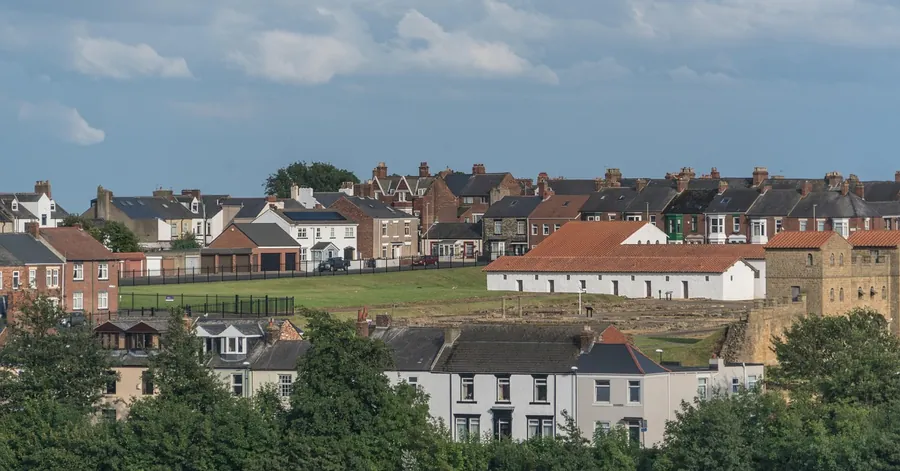
Hoole grew up beside the railway from the 1850s onwards, and most of its terraces were roofed in Welsh slate nailed straight onto battens. Many of the streets have little or no front garden, which is why the scaffold licence matters here more than almost anywhere else in the city. A typical job on a two-storey Hoole terrace with a rear outrigger runs like this.
- Day 1 - scaffold up front and back. With no side access, the back lift often goes through the house or down the entry between yards.
- Day 2 - the front slope is stripped. Sound slates are stacked for reuse, since it's usually the nails that have failed rather than the slate.
- Day 3 - any timber repairs, then breathable membrane and new battens. Whatever isn't covered is sheeted before the crew leaves.
- Days 4 to 6 - the main roof is slated, salvaged slate on the front where it shows, new or reclaimed on the back.
- Day 7 - ridge, and new lead where the roof meets the chimney and the neighbour's wall.
- Days 8 to 10 - the outrigger's own small roof, its valley or gutter, then the scaffold is struck once you've checked the work.
Shared chimney stacks are the usual reason a Hoole job runs to ten days. If the stack needs repointing or new flaunching, that's your neighbour's chimney as much as yours.
1930s Semis and Bungalows: Four to Eight Days, With One Catch Each
Chester's interwar semis are spread around Newton, Upton and the Lache, where private semis went up along Lache Park Avenue from 1935. Most have hipped roofs in clay or concrete tiles, often with a small roof over a bay. Expect five to eight working days. The flat slopes go quickly. The hips take longest, because every tile along them has to be cut to the angle, and the hip and ridge tiles then need bedding or a dry-fix system. Day six or seven is usually the bay roof, its lead, and new fascias if they're being done at the same time.

The catch with a semi is the join. Your ridge runs straight over the party wall, and the new tiles have to meet the neighbour's older ones cleanly. That detail is easy to get right with a bit of notice and awkward to sort out halfway through the job.
A bungalow is often the quickest re-roof of all, four to six days, because a single-storey scaffold goes up in hours. Its weak point is that every room sits directly under the roof, so there's nowhere upstairs to retreat to. A careful roofer will only strip as much as they can make watertight the same afternoon, which means a wet week slows a bungalow more than a two-storey house.
A Large Period House in Curzon Park: Three to Six Weeks on Site
Curzon Park's first house went up in 1847, and the suburb filled in over decades with villas set back behind walls and big trees. A house there might have slate on the main roof, clay tile on a later wing, lead on the bays, three or four stacks and a parapet gutter hidden behind stone. Each of those is its own small job, and a full re-roof is really several of them in sequence.
The paperwork comes before any of that. Curzon Park appears on Cheshire West and Chester Council's list of conservation areas, parts of it carry Article 4 directions, and a few houses are listed. Like-for-like work in a conservation area often needs no application, but on a listed house even a re-roof in matching materials usually needs listed building consent, and the council has eight weeks to decide. Speak to its conservation team before you book a roofer's start date, not after.
On site, the scaffold goes round all four sides, sometimes with a temporary roof over the top. That costs more, but it takes the weather out of the schedule, and on a job lasting a month or more we'd usually say it's money well spent. The crew then works one slope at a time. Valleys, dormer cheeks and parapet gutters are slow, careful leadwork, and if a stack needs taking down and rebuilding, that alone can add a week.
What Adds Days to a Chester Re-Roof
A schedule on paper assumes nothing goes wrong. When a Chester re-roof overruns, it's nearly always down to one of these five.
Scaffold licences on city-centre streets
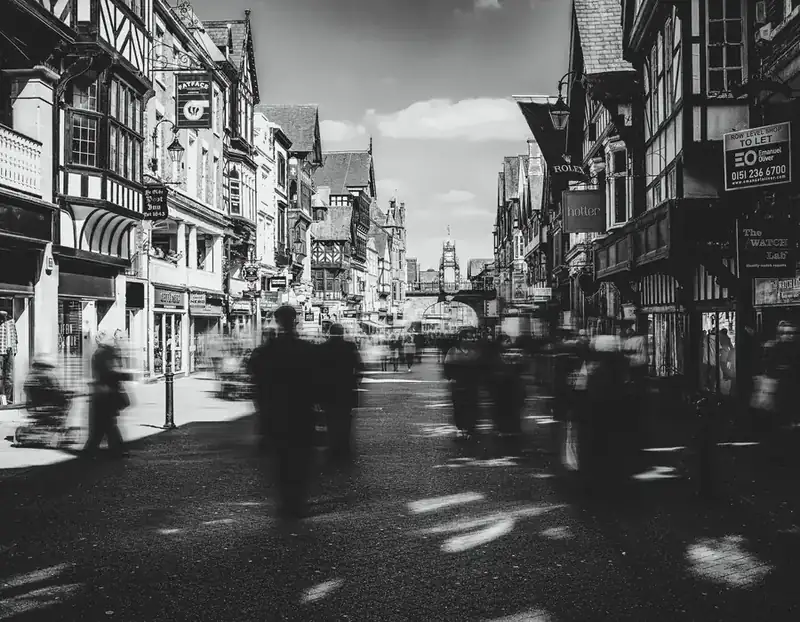
Inside the walls and on the busy streets just outside them, a scaffold will almost always stand on the public footway, and some need a pedestrian walkway underneath. Narrow streets, the Rows and restricted delivery times make the job slower to set up and slower to service. Our guide to scaffolding for roof work in Chester goes through what the licence involves.
Rotten timbers
Nobody can see the tops of the rafters or the wall plate until the old covering is off. Wet rot where a gutter has overflowed for years, or a sagging rafter under a leaking valley, can add one to three days. A good quote gives a price per rafter or a day rate for timber work, so you aren't negotiating with the roof open.
Reclaimed slate sourcing
If the house needs reclaimed slate to match its neighbours, the right size and colour may not be in stock locally. Order it before the strip. Running short halfway through a slope is a common cause of a roof sitting under sheets for days.
Wet weather
Roofers can lay slate in light drizzle, but nobody strips a roof in heavy rain, and mortar shouldn't go down in frost. Hawarden's long-term averages show rain on roughly 15 days in November and 14 in December. As a rough guide, add two or three days to any estimate for a re-roof that starts between October and February.
Approvals
Listed building consent can take up to eight weeks, so on a listed house build that time in before booking. Re-covering more than a quarter of a roof also brings in the Building Regulations insulation rules, which usually means extra insulation in the loft or at rafter level.
Living in the House While the Roof Is Off
Most Chester homeowners stay put during a re-roof, and for a terrace, semi or bungalow that's usually fine. The roof is only ever partly open, and a decent crew sheets it every evening. It still helps to know what you're in for.
Clear the loft first. Stripping drops dust, grit and old mortar through the gaps between the rafters, and anything stored up there will end up filthy. Expect noise from about 8am, and if you work from home, plan to be in a room away from the slope being stripped that day. Pets are usually happier elsewhere on strip day. If the roofer wants a skip on the road outside rather than on your drive, that needs its own licence from the council, which the skip firm normally arranges.
Moving out makes more sense in a few cases: a long job on a large period house through the winter, someone at home who is elderly or unwell, or a bungalow where the bedrooms are directly under the slope being stripped. Ask the roofer which days will be noisiest and which rooms will be affected, and plan around those rather than the whole job.
Roof Replacement Timings in Chester: Common Questions
How long does a full roof replacement take on a three-bedroom semi in Chester?
Usually five to eight working days on the roof itself, with the scaffold going up the day before and coming down a day or two after you've checked the work. From accepting the quote to the scaffold coming down, four to eight weeks is typical.
Can a roof be replaced in winter in Chester?
Yes. It just takes longer. Rain stops stripping, frost stops mortar work, and short daylight hours cut the working day. Dry-fix ridges and verges help, and a sensible roofer only opens as much roof as they can cover by mid-afternoon. Allow two or three extra days between October and February.
Do I need to move out while my roof is replaced?
Rarely. The roof is stripped and covered in sections and sheeted every night, so most people stay at home. It's worth considering for a long job on a large house in winter, or if someone at home is vulnerable to cold, dust or noise.
Do I need permission to replace a roof in a Chester conservation area?
Like-for-like replacement in a conservation area often needs no planning application, but parts of areas such as Curzon Park have Article 4 directions, so check with Cheshire West and Chester Council first. A listed house normally needs listed building consent, which can take up to eight weeks. Building Regulations apply to any re-roof that covers more than a quarter of the roof.