Bay Window Roof Repair Chester: Porches, Canopies and 2026 Costs
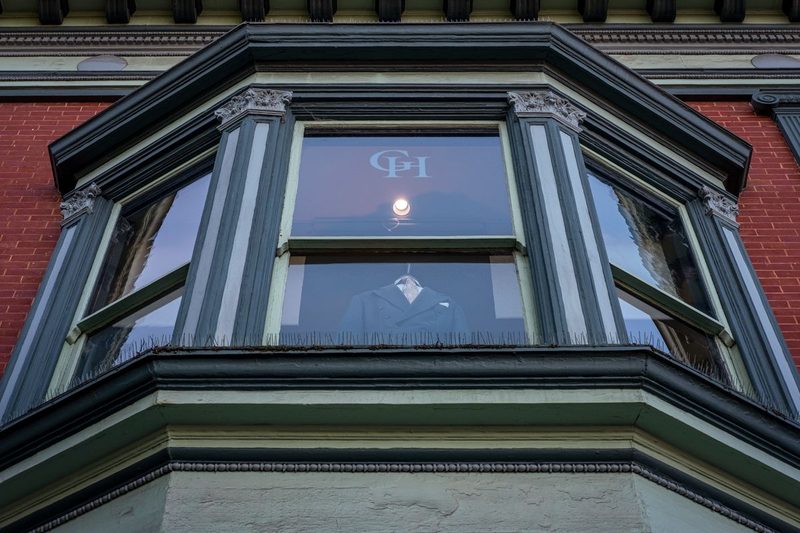
Bay window roof repair in Chester is one of the most common small jobs we get asked about, and it usually starts with a damp patch above a front room window that nobody can quite explain. The main roof looks fine. The problem is the little roof underneath it. Bay roofs, porch roofs and door canopies make up maybe 3-5% of a house's total roof area, yet in our experience they account for something like one in five leak call-outs on Chester's Victorian and Edwardian terraces and 1930s semis. They sit lower, catch more splash-back, and are usually built with thinner timbers and cheaper detailing than the main roof. Chester gets around 750-800mm of rain a year, below the UK average of roughly 1,160mm, but much of it arrives as wind-driven rain off the Irish Sea and the Dee estuary, which hits front elevations hard. This guide covers why these small roofs fail first, what to look for, and what repairs cost in 2026.
Why Bay Window and Porch Roofs Fail Before the Main Roof
A main roof on a terrace in Hoole or Boughton is usually pitched at 35-45 degrees, so water runs off quickly. A bay roof is often much shallower. Lead-covered bays can be pitched at just 5-15 degrees, and many felt porch roofs are close to flat. Water sits on them longer, debris collects, and any small split or lifted joint gets tested every time it rains. On top of that, the weakest point on any small roof is where it meets the house wall, and a bay has that junction along its full width. If you're not sure whether your bay is the culprit, you can ask our Chester roofing team to take a look before the damp spreads into the plaster.
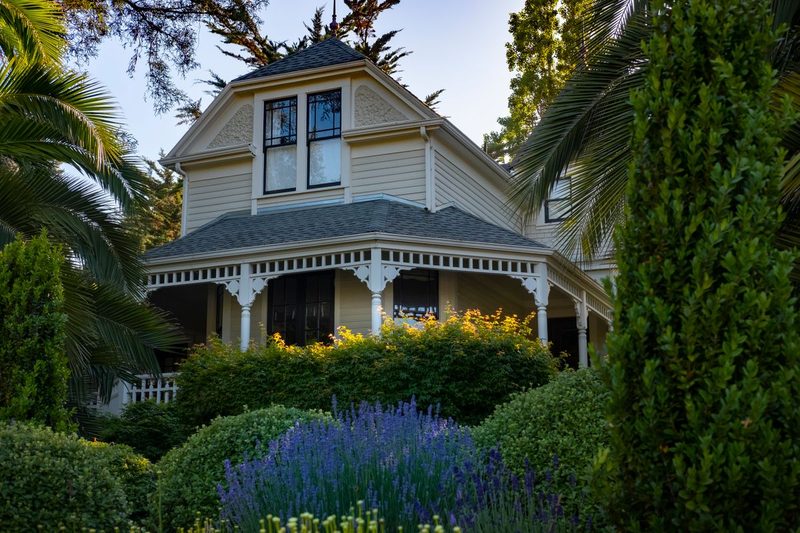
The second issue is age. A lot of Chester's bays date from 1880-1935, and while plenty of main roofs have been re-covered once or twice since then, the bay roof often gets left alone because it's awkward and "seems fine". We regularly see original lead on bays that is 80-100 years old, worn thin and cracked along old fold lines. Felt porch roofs added in the 1970s and 1980s have usually had 2-3 times their expected life already.
Then there's the structure itself. Bay roofs sit on a timber frame that rests on the bay's window head. If that head timber gets wet for years, it softens, the roof drops by a few millimetres, and the flashing at the wall pulls away. One problem feeds the next.
Lead-Covered Bay Roofs on Victorian and Edwardian Terraces
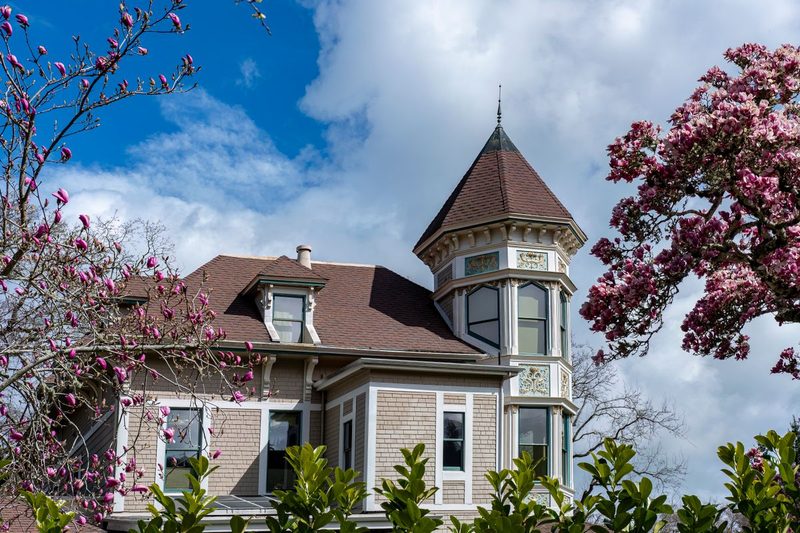
Most of the canted and square bays on streets around Hoole Road, Handbridge and Curzon Park have lead tops, sometimes with a small hipped or domed shape. Good lead lasts 70-100 years, so failure isn't usually the metal wearing out. It's how it was laid. Sheets that are too big, fixed too tightly, or laid without proper rolls and drips can't expand and contract, and they crack. Lead moves about 3mm per metre between a cold January night and a hot July afternoon, and if it can't move, it splits.
The Lead Sheet Training Academy's guidance on lead sheet installation sets out maximum bay sizes and fixing rules for each lead code, and it's a useful benchmark when you're comparing quotes. Code 5 or Code 6 is right for most bay roofs. Anything thinner on a bay that people can see from the street is a corner being cut.
Lead bay repair costs in 2026
- Patch-soldering or lead-welding a small split: £150-£300
- Re-dressing and re-fixing lifted lead, re-pointing the wall flashing: £250-£450
- Full re-lead of a standard single-storey bay in Code 5: £900-£1,800
- Re-lead plus replacement of rotten boarding: £1,400-£2,500
Mastic and bitumen paint on a lead bay are a temporary patch at best. They trap water against the lead and speed up corrosion underneath.
Felt and Flat Porch Roofs on 1930s Semis in Upton and Newton
Upton, Newton and parts of Vicars Cross have thousands of 1930s semis and 1950s-60s houses where the porch or the bay has a small flat roof covered in mineral felt. Traditional three-layer felt lasts roughly 10-20 years. Plenty of the ones we see are 25-30 years old, crazed, blistered, and patched more than once.
Because these roofs are so small, often 2-4 square metres, a lot of homeowners assume a repair should cost next to nothing. The trouble is that a porch roof takes almost as much setting up as a bigger flat roof. You still need to strip it, check the deck, fit new upstands against the wall, and finish the edge trims and drip. That's why per-square-metre prices on small roofs look high.
Porch roof options and prices
- Felt patch repair: £120-£250
- Re-felt a small porch with torch-on felt: £500-£900
- EPDM rubber membrane: £550-£1,000, with a lifespan of 25-40 years
- GRP fibreglass: £650-£1,200, lasting around 25-30 years
For a porch you plan to keep for a long time, we'd usually steer people towards EPDM or GRP. The extra £100-£300 over felt buys you roughly double the lifespan.
Tiled Canopies, Lean-To Porches and the Wall Junction
Many Edwardian houses in Chester have a small tiled canopy over the front door, and plenty of later houses have a lean-to porch with a tiled or slated pitched roof. These look tougher than a felt roof, and the tiles themselves often are. The weak point is almost always the abutment where the roof meets the house wall.
On a lean-to, water running down the main wall needs to be thrown clear of the roof by a stepped or straight lead flashing chased into a mortar joint. When that flashing was done with a cement fillet instead (very common on porches added in the 1960s-80s), the fillet cracks within 10-15 years and water runs straight behind the tiles. We'd estimate more than half of the leaking lean-to porches we look at have a mortar fillet rather than lead.
The same logic applies where a bay roof's pitches meet each other. That internal junction behaves like a small valley, and it fails in the same ways a main roof valley does. We've written about this in our guide to roof valleys in Chester and what lead, GRP and dry valley repairs cost, and most of what's in there applies to bays at a smaller scale.
Typical 2026 prices for tiled canopies and lean-tos:
- Replace a mortar fillet with new lead flashing: £250-£500
- Replace a handful of slipped or broken tiles: £120-£250
- Strip and re-tile a small canopy, new membrane and battens: £700-£1,400
- Strip and re-roof a lean-to porch: £1,200-£2,500
Warning Signs Your Bay Window Roof Needs Repair
Most bay roof problems show up inside before they show up outside. Look for:
- A brown tide mark or bubbling paint on the ceiling just inside the bay, usually in the corners
- Damp or loose plaster above the window head
- Swollen, soft or flaking paint on the timber window frame at the top
- Black mould in the top corners of the bay, worse after a windy wet spell
- Gaps between the bay roof and the main wall you can see from the street
- Felt that has blistered, cracked or has moss growing in the seams
- A slight sag or dip across the top of the bay
From outside, use a pair of binoculars from across the road. You can't see the whole roof that way, but you'll spot lifted lead, missing tiles and cracked fillets. Chester's autumn and winter tend to bring 15-20 rain days a month from October to January, so a stain that appears in November is often a fault that started in spring.
One thing to rule out: condensation. Bay windows are often the coldest part of a front room, and in winter they collect moisture on the glass and in the corners. If the damp is worst on cold, dry mornings rather than after rain, it may be that rather than the roof.
Bay Window Roof Repair in Chester: Repair or Replace?
This is where the honest answer is "it depends on the timber". If the deck and the frame underneath are sound, a targeted repair to the lead, felt or flashing is almost always the cheaper and sensible option. If the boards are soft, there's no point putting a new covering on rotten wood. You'll be back within 2-3 years.
A rough rule we use: if repairs would cost more than about 40-50% of a full re-cover, or the roof has been patched twice already, replace it. On a felt porch roof over 20 years old, replacement nearly always wins. On a lead bay that's sound apart from one split, repair it and save yourself £1,000 or more.
Where the timber has gone further, into the window head or the bay's corner posts, the job becomes part roofing and part joinery. Replacing a rotten bay head timber or corner post usually adds £600-£1,500, and if the window needs to come out or be propped, more. It's worth getting this checked properly at the first sign of damp, because a £300 flashing repair left for three winters can easily turn into a £2,500 rebuild.
Planning, Conservation Areas and Finding a Roofer in Chester
Like-for-like repairs to a bay or porch roof don't need planning permission. Building a new porch or changing its size or shape might, and the Planning Portal's guidance on porches covers the permitted development limits, including the 3 square metre floor area and 3 metre height rules. Chester has a large number of conservation areas, and on houses in them, or on listed buildings, Cheshire West and Chester Council will expect original materials to be kept. That usually means lead stays lead, slate stays slate, and swapping a lead bay for felt or GRP on a front elevation is likely to be refused.
Finding someone for a small job can be harder than finding someone for a whole roof. Chester and the wider Cheshire West area have a decent supply of roofers, but many are booked 4-8 weeks ahead from September onwards, and some don't want to quote for jobs under £500. Leadwork especially is a specialist skill, and not every roofer is confident with bossing and welding on a curved or hipped bay. Ask to see photos of bays they've done, check the lead code they plan to use, and make sure the quote covers scaffold or a tower, since most bays need one at £150-£400.
Weather matters too. Lead can be laid most of the year, but felt and GRP need dry conditions and, for GRP, temperatures above about 5°C to cure properly. On Chester's damp winter days that can mean waiting, so spring and early autumn are the best times to book porch and flat bay roofs.
Frequently Asked Questions About Bay Window Roof Repair in Chester
How much does bay window roof repair cost in Chester?
Small lead repairs cost £150-£450. A full re-lead of a single-storey bay runs £900-£1,800, rising to £2,500 if the boarding underneath needs replacing. Most jobs also need a scaffold tower at £150-£400.
How long should a porch roof last?
Traditional felt lasts 10-20 years, torch-on felt 15-25 years, EPDM rubber 25-40 years and GRP fibreglass around 25-30 years. A properly laid lead bay roof can last 70-100 years.
Can I replace a lead bay roof with felt or GRP?
On most houses you can, though it rarely looks right on a period front. If your home is listed or in one of Chester's conservation areas, the council is likely to expect lead to be kept, so check before you commit.
Why is my bay window ceiling damp when the main roof is fine?
The bay has its own small roof, and the joint between that roof and the house wall is the most common leak point. Cracked lead, a failed mortar fillet or worn felt are the usual causes. Condensation can also cause damp in a cold bay, so note whether it appears after rain or on cold dry mornings.
Ready to work with Chester Roofers & Contractors?
Let's connect! We’re here to help.
Send us a message and we’ll be in touch.
Or give us a call today at 01244 740253
Agency Contact Form
More Marketing Tips, Tricks & Tools
Chester Roofers & Contractors