Party Wall Notices and Shared Roof Work in Chester: When You Need One and What It Costs
Roughly 60% of Chester's housing is terraced or semi-detached, which means the majority of roof jobs in this city touch a wall someone else half owns. Most homeowners find that out late. A roofer starts cutting flashing into the party wall, the neighbour comes out, and a straightforward £4,500 re-roof turns into a stalled site and a solicitor's letter. The Party Wall etc. Act 1996 has been law for nearly thirty years, yet surveyors estimate that fewer than half of qualifying jobs are ever notified properly. In Chester, where terraces in Hoole, Handbridge, Boughton and Garden Lane commonly share chimney stacks as well as walls, the odds of a roof job qualifying are high. Here's when you need to serve notice, what it costs, and how to keep the whole thing to two weeks rather than two months.
What Counts as a Party Wall on a Roof
A party wall is any wall that separates two owners' buildings, or that sits astride the boundary. On a Chester terrace, that's the wall running up between you and next door, and it usually continues above the roof line as a parapet or into a shared chimney stack.

The three situations that catch roof work are these. Cutting into the party wall to insert flashing, a tray, or new lead. Raising, lowering or rebuilding the wall, including a parapet or a chimney stack that straddles the boundary. And underpinning or exposing the wall so it loses weather protection.
That third one surprises people. Stripping slates back to the wall junction on a terrace exposes the neighbour's side to weather for as long as the roof is open. If your job involves any of the three, the Act applies whether the work is urgent or not, and whether your neighbour is friendly or not. A roofer who has worked on Chester terraces before will spot it at survey stage, which is one reason it pays to get a proper look at the job before booking it in rather than accepting a price off a photo.
What Does Not Need a Notice
Plenty of roof work doesn't qualify, and it's worth knowing so you don't over-engineer a simple repair.
Replacing slates or tiles on your own roof slope. Renewing your own gutters, fascias and soffits. Repointing your own chimney where it sits wholly within your boundary. Fitting a rooflight in your own slope. Re-felting and battening your own roof without touching the wall. Standard maintenance, in other words. The Act is about work to the shared structure, not about work that happens near it.
Serving the Notice: Timings and Format
The notice itself is free. You write to the adjoining owner describing the proposed work and when it starts.

For work to a party wall or structure, you must give at least two months' notice. For excavation near a neighbour's foundations, one month. The notice must name all owners of the neighbouring property, which on a rented terrace means the landlord, not the tenant. It must describe the works, give a start date, and be dated.
The neighbour then has 14 days to respond in one of three ways. They can consent in writing, which ends the process and lets you get on with it. They can dissent and appoint their own surveyor. Or they can do nothing, which the Act treats as dissent after 14 days, and a surveyor then has to be appointed on their behalf.
Two months is the number that catches people out in Chester, because roofers here are usually booked five or six weeks ahead and homeowners assume the notice runs alongside the wait. It does, if you serve it the day you accept the quote. It doesn't if you serve it a fortnight before the scaffold arrives.
What Surveyors Cost in 2026
If your neighbour consents, the cost is a stamp. If they dissent, you're into surveyor territory, and the building owner (you, the person doing the work) pays both sides' reasonable fees.

Current Chester and Cheshire rates look like this:
- Agreed surveyor acting for both parties: £900 to £1,600 for a straightforward roof or chimney matter
- Two separate surveyors, one each: £1,600 to £3,200 combined
- Schedule of condition survey on the neighbour's property: usually included, sometimes £350 to £600 separately
- Third surveyor, if the two cannot agree: £800 to £1,800 on top, rarely needed
An agreed surveyor, one professional acting impartially for both owners, is almost always the sensible route on roof work and roughly halves the bill. You can suggest it in the notice itself. RICS standards and guidance set out what party wall surveyors are expected to do, and most party wall surveyors in the Chester area are RICS or FPWS members.
The Award
What you get at the end is a party wall award: a document setting out what work is permitted, how and when it's done, working hours, access arrangements, and a photographic record of the neighbour's property before work starts.
That record is the real value. If a crack appears in next door's bedroom ceiling three weeks after your scaffold comes down, the schedule of condition settles the argument in an afternoon instead of six months. The full text of the Party Wall etc. Act 1996 is on legislation.gov.uk if you want to read what your surveyor is working from.
Shared Chimney Stacks: Chester's Recurring Problem
A large share of Chester's Victorian terraces have chimney stacks sitting directly on the party wall, serving flues from both houses. Legally they are party structures, and every serious repair is notifiable.
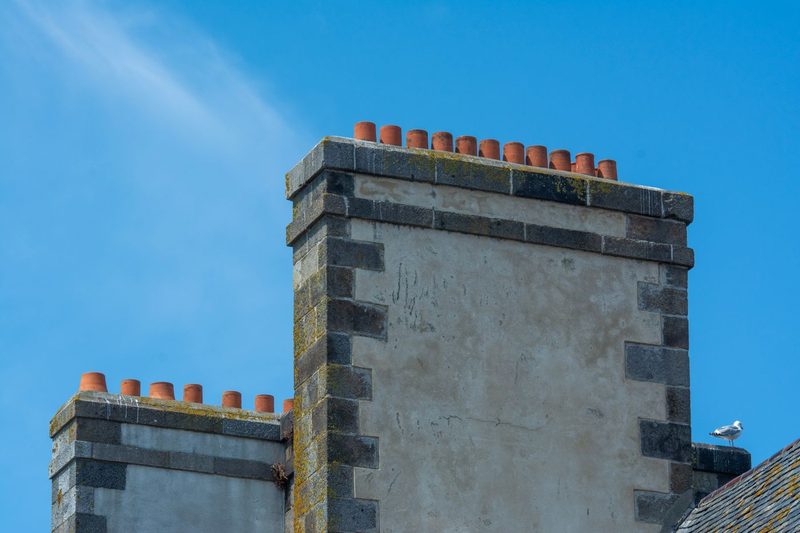
This matters more here than in much of England because of how those stacks have aged. Chester sits in a relatively wet part of Cheshire, around 720mm of rain a year, and the prevailing south-westerly drives it into the stack's exposed face. The lime mortar used in the 1880s and 1890s weathers back at roughly 1mm to 2mm a decade on an exposed elevation, so a stack that was last repointed in the 1970s is now soft to a thumbnail.
Typical costs, once you're into shared-stack work: repointing a stack from scaffold, £450 to £900. Rebuilding the top four courses, £900 to £1,700. Full rebuild from roof level, £1,800 to £3,500. Removing a stack entirely and making good, £1,400 to £2,800, which is notifiable in almost every case because you are lowering a party structure. Our guide to parapet and box gutters on Chester's Victorian terraces covers the other shared structure that causes trouble on these houses.
One practical warning. If the neighbour's flue is still live and serving a working fire or a boiler, any stack work has to keep that flue functioning or provide a temporary alternative. That is a design question, not a site decision, and it belongs in the award.
Where Conservation Rules Overlap
Chester has one of the larger historic cores in the north west, with conservation areas covering the city centre, Handbridge, Hoole and several outlying villages, plus a high concentration of listed buildings.

Party wall consent and planning consent are entirely separate. Your neighbour agreeing to a chimney rebuild does not give you permission to do it in modern brick on a listed terrace, and a conservation officer's approval does not remove the need to serve notice. You can need both, and on a listed terrace in the city centre you almost certainly do.
Where a building is listed, listed building consent is required for work affecting its character, including chimney stacks, roof coverings and rainwater goods, and doing it without consent is a criminal offence rather than a planning breach. In conservation areas, an Article 4 direction may remove permitted development rights for things like roof coverings and rooflights. Cheshire West and Chester's planning and building control service can confirm the status of a specific address, and it's worth the check before the scaffold is booked.
Material choice follows from that. Welsh slate on a listed Chester terrace is not interchangeable with a Spanish slate or a fibre-cement substitute in the eyes of a conservation officer, and the price gap is significant: reclaimed Welsh slate runs £2.20 to £4.00 per slate against roughly £1.10 to £1.80 for Spanish.
If Your Neighbour Refuses or Ignores You
This is the fear that stops people serving notice at all, and it's misplaced. A neighbour cannot veto your work.

Dissent does not mean refusal. It means the terms get set by surveyors rather than by agreement, and the surveyors' job is to permit the work while protecting the adjoining owner. An award will be made. The work will proceed. It simply costs you more and takes longer.
Silence is treated as dissent after 14 days, and you then appoint a surveyor on the neighbour's behalf, which sounds hostile but is what the Act prescribes. If a neighbour physically obstructs access, the award can grant you rights of access with 14 days' notice, and obstructing that is enforceable through the courts.
What you cannot do is skip the process. Carrying out notifiable work without a notice leaves you exposed to an injunction stopping the job mid-way, with the scaffold up and the roof open, and liable for damage without the protection of a schedule of condition. That is the genuinely expensive outcome, and it is entirely avoidable with a letter posted eight weeks earlier.
Keeping It Simple and Cheap
The cheapest party wall process is the one where the neighbour consents. Getting consent is mostly about how you ask.

Knock first, before anything is in writing. Explain what's happening, when, and roughly how long the scaffold will be up. Offer to share the scaffold if they have work of their own pending, which on a terrace of identical 1890s roofs is often true and can save you both £600 to £1,200. Then serve the formal notice afterwards, so it arrives as confirmation of a conversation rather than as a shock from the postman.
Serve early. Use a template rather than drafting from scratch. Suggest a single agreed surveyor in the notice. And keep the neighbour informed once work starts, because most disputes that end up with a third surveyor began with someone finding out about a change from the noise rather than from you.
Frequently Asked Questions
Do I need a party wall notice to replace my roof in Chester?

Only if the work touches the shared wall or a shared chimney stack. Replacing tiles or slates on your own slope does not qualify. Cutting new flashing into the party wall, rebuilding a shared stack, or exposing the wall to weather does, and needs two months' notice.
Who pays for the party wall surveyor?
The building owner carrying out the work pays reasonable fees for both sides. Using a single agreed surveyor acting impartially for both owners typically costs £900 to £1,600 in Chester, against £1,600 to £3,200 for two separate surveyors.
What happens if my neighbour ignores the party wall notice?
After 14 days, silence is treated as dissent. You then appoint a surveyor on their behalf and the process continues to an award. Your neighbour cannot block the work, only influence the conditions attached to it.
Does a party wall award cover listed buildings in Chester?
No. Party wall consent and listed building consent are separate. On a listed Chester terrace you will need both, and carrying out work affecting a listed building's character without consent is a criminal offence. Check the address with Cheshire West and Chester Council first.
```json { "@context": "https://schema.org", "@type": "FAQPage", "mainEntity": [ { "@type": "Question", "name": "Do I need a party wall notice to replace my roof in Chester?", "acceptedAnswer": { "@type": "Answer", "text": "Only if the work touches the shared wall or a shared chimney stack. Replacing tiles or slates on your own slope does not qualify. Cutting new flashing into the party wall, rebuilding a shared stack, or exposing the wall to weather does, and needs two months' notice." } }, { "@type": "Question", "name": "Who pays for the party wall surveyor in Chester?", "acceptedAnswer": { "@type": "Answer", "text": "The building owner carrying out the work pays reasonable fees for both sides. Using a single agreed surveyor acting impartially for both owners typically costs £900 to £1,600 in Chester, against £1,600 to £3,200 for two separate surveyors." } }, { "@type": "Question", "name": "What happens if my neighbour ignores the party wall notice?", "acceptedAnswer": { "@type": "Answer", "text": "After 14 days, silence is treated as dissent. You then appoint a surveyor on their behalf and the process continues to an award. Your neighbour cannot block the work, only influence the conditions attached to it." } }, { "@type": "Question", "name": "Does a party wall award cover listed buildings in Chester?", "acceptedAnswer": { "@type": "Answer", "text": "No. Party wall consent and listed building consent are separate. On a listed Chester terrace you will need both, and carrying out work affecting a listed building's character without consent is a criminal offence. Check the address with Cheshire West and Chester Council first." } } ] } ```
```json { "@context": "https://schema.org", "@type": "Article", "headline": "Party Wall Notices and Shared Roof Work in Chester: When You Need One and What It Costs", "description": "Re-roofing a Chester terrace or semi often means working on a shared party wall. Here's when the Party Wall Act applies to roof and chimney work, how the notice process runs, what surveyors charge in 2026, and what happens if your neighbour refuses.", "author": { "@type": "Organization", "name": "The Team" }, "datePublished": "2026-09-18", "dateModified": "2026-09-18", "articleSection": "Roofing" } ```
Ready to work with Chester Roofers & Contractors?
Let's connect! We’re here to help.
Send us a message and we’ll be in touch.
Or give us a call today at 01244 740253
Agency Contact Form
More Marketing Tips, Tricks & Tools
Chester Roofers & Contractors