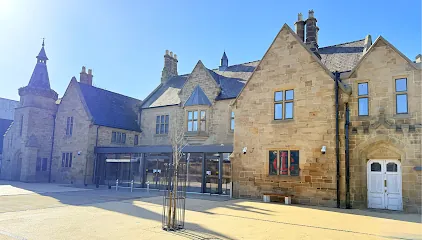
Slate Roofs in Wrexham
Is your slate roof shedding the odd slate onto the path?
Natural Welsh, Spanish and synthetic slate laid, relaid and repaired by hand.
CALL US HERE - 01244 740253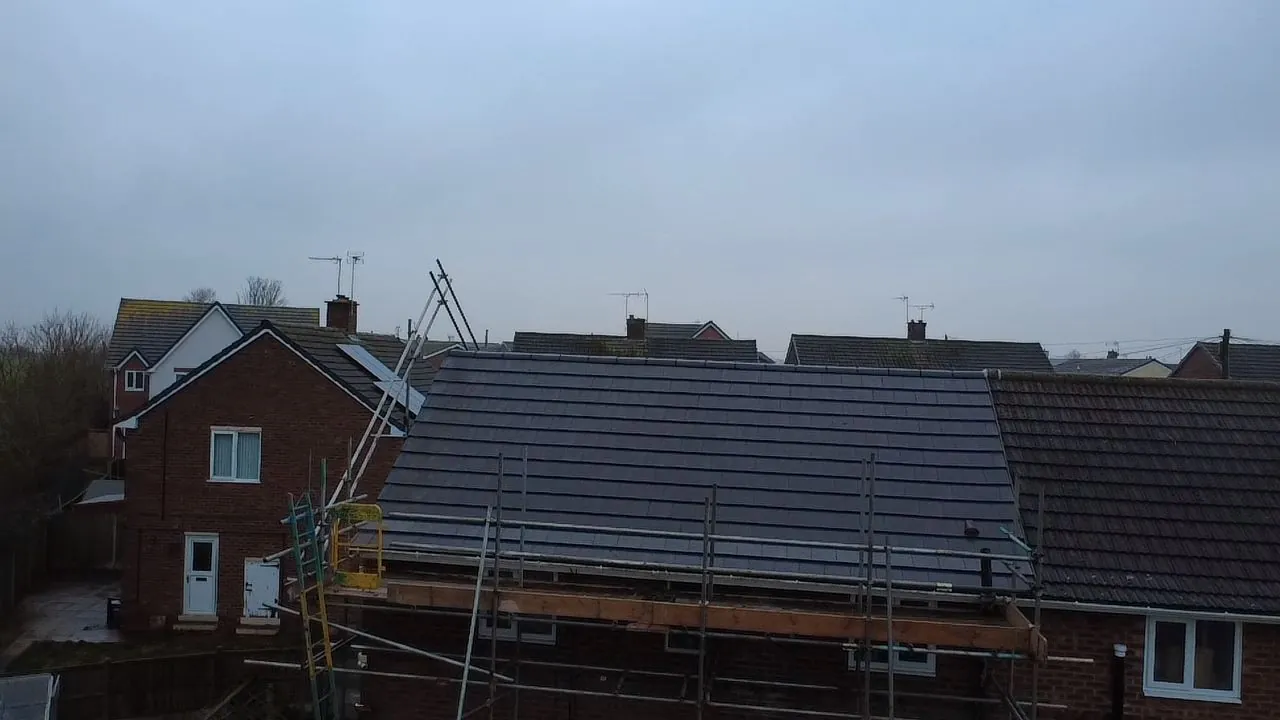
GET A FREE ASSESSMENT
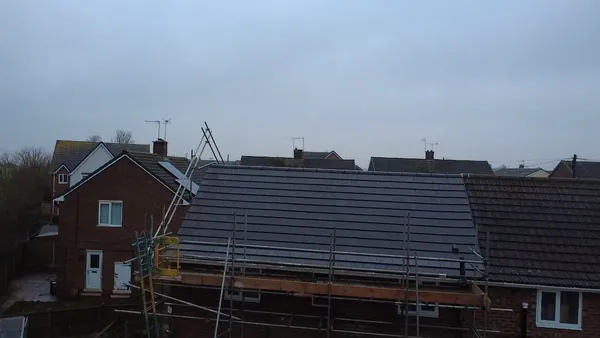
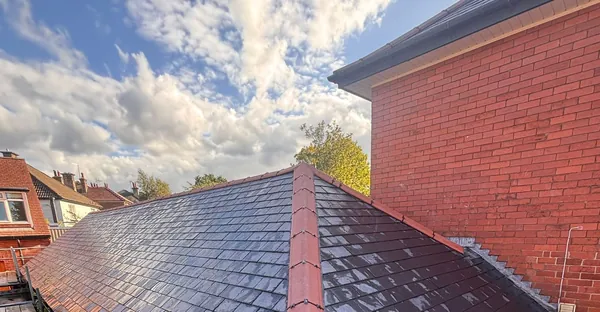
Slate roofs in Wrexham make a lot of sense. The North Wales quarries aren't far away, and when Wrexham grew through the 19th century, slate was the obvious covering for its terraces. A lot of it is still up there doing its job well over a hundred years later.
We fit new slate roofs, strip and relay old ones, and repair the odd slipped or broken slate. Our roofers have over 25 years of experience, and slate is the work that most rewards a careful hand. Every one is holed, hung and nailed individually.
For a wider look at the roofing we cover locally, see our Wrexham page. If your slates are sound and only a few have slipped, our roof repairs in Wrexham page is probably the place to start.
Slate choices for Wrexham roofs
Natural Welsh slate
The dearest option and, for many of Wrexham's older houses, the right one. It's dense, it holds its colour, and it's what the roof was built with in the first place. On a listed building or in a conservation area it is often the only choice the council will be happy with. It costs more up front, but you're unlikely to buy it twice.
Spanish slate
Spanish slate is natural slate at a lower price. Quality varies from quarry to quarry, so we only fit grades we trust and we'll tell you where it comes from. It's a sensible pick for a house outside a conservation area where you want the look of real slate without paying the Welsh premium.
Synthetic slate
Made from resin and recycled material, synthetic slate is lighter and very consistent in size and colour. It's the cheapest of the three and quicker to lay. It suits newer houses and extensions well. But it won't pass for old Welsh slate on a period terrace if anyone looks closely, and conservation officers do look closely.

1,000+ Roof Repairs
500+ Replacement
Welsh slate on Wrexham's older streets
Look up in the older parts of Wrexham and slate is the usual covering on the Victorian terraces. The villages have their own history with it. Out at Marford, the estate cottages built for the Trevalyn estate between the late 1700s and early 1800s were thatched to begin with and later re-roofed in slate from the Horseshoe Pass. Several of those cottages are now listed, and Marford is also a designated conservation area, so any work there needs care.
The trouble with a century-old slate roof is rarely the slate. It's the iron nails, which rust through, and the battens, which rot. On higher ground like Brymbo Hill, where weather comes in hard and wet off the hills, those failures show sooner. Frost gets into the odd poor slate too. Good Welsh slate shrugs that off. Cheap imported slate from an unknown quarry often doesn't.
How a slate roof job goes
Survey and sample
We get up and check the slates, the nails, the battens and the leadwork. If you're matching an existing roof, we take a sample to compare size, thickness and colour. The written quote sets out the slate options and what each one costs.
Careful strip
On a relay, every slate comes off by hand and gets sorted. Good ones are cleaned and stacked for reuse. Broken or flaking ones go in the skip. Any part of the roof left open overnight is sheeted over.
New battens and membrane
Treated battens go on at the right gauge for the slate size, over a breathable membrane. Slates are graded by thickness, and the thicker ones go lower down the roof, where the most water runs off.
Hang, finish and hand over
Slates are nailed or hooked in place, with lead, ridge and verge details finished to match. We send photos and video while the slates go on, and at the end you get a guarantee covering the materials and our workmanship.
Why trust our roofers with slate in Wrexham
- We reuse your sound Welsh slates where we can, which keeps the cost down and the roof's character intact.
- Over 25 years of hands-on roofing, with plenty of slate work on period houses.
- Matching slate sourced for conservation areas and listed buildings, so the result passes inspection.
- Honest advice on Spanish or synthetic slate when your house and budget suit them better.
- Photo and video updates, so you see the battens and membrane before they're covered up for good.
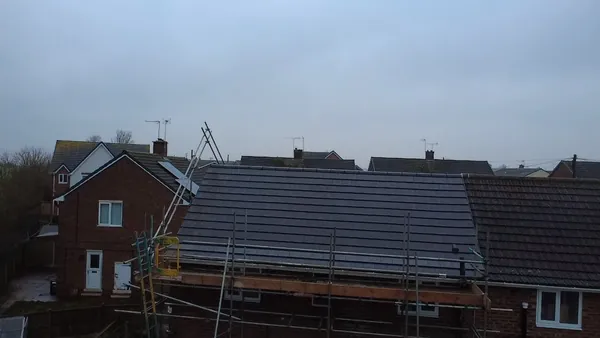
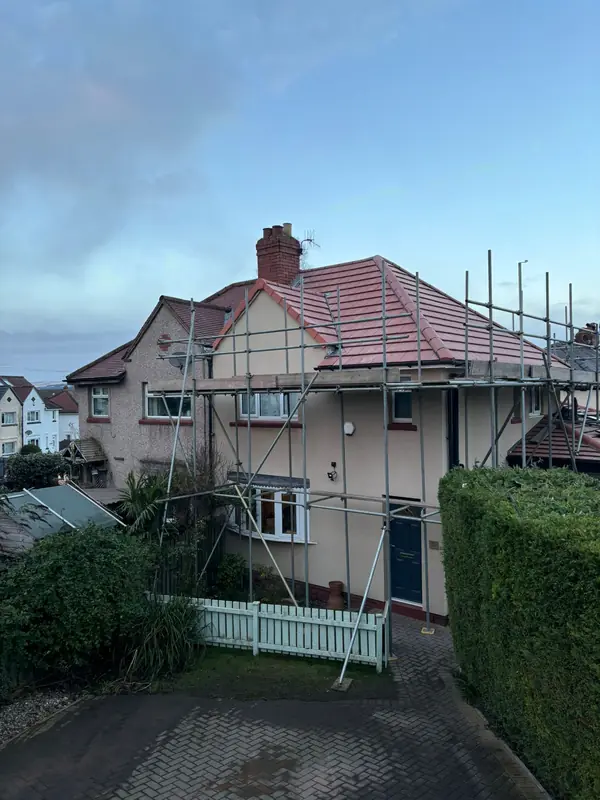
What will a slate roof cost you in Wrexham?
For a typical semi, a full slate roof usually starts at around £5,000 and can run to £10,000 or more. Natural Welsh slate costs more than Spanish, and Spanish costs more than synthetic. The size and pitch of the roof, the number of chimneys and dormers, and how much new timber is needed do the rest.
Reclaim is worth asking about. If your existing slates are sound, reusing them on the rear slope and buying new only for the front can cut the materials bill. On the other hand, a listed cottage in a village like Marford may need a specific slate and detailing to satisfy consent, which tends to cost more. And hillside houses at Brymbo or Rhos can need extra scaffold on the low side.
Slate Roofs in Wrexham: Your Questions
Do I need consent to re-slate a house in Wrexham?
Re-slating with matching slate doesn't normally need planning permission. On a listed building, changing the covering can need listed building consent, so speak to Wrexham County Borough Council before anything is ordered. In conservation areas like Marford or Gresford, swapping slate for tile is the kind of change the council will want to hear about first. Building Regulations approval is also likely if you change covering type, because the weight on the roof changes.
Will Welsh slate cope with frost on a house up at Brymbo?
Good Welsh slate is dense and takes in very little water, so frost has almost nothing to work on. That's why so much of it has survived a century on exposed sites. Where frost damage does turn up, it's usually in lower-grade slate or in the mortar at ridges and verges, not in the Welsh slate itself.
Where does the slate on Wrexham's older houses come from?
Much of it came from the North Wales quarries, which supplied a huge share of Britain's roofing slate in the 19th century. Marford's estate cottages, for example, were re-roofed with slate from the Horseshoe Pass. If you want to match it today, new Welsh slate is still quarried, and good reclaimed slate turns up too.
Can a few slates be replaced without stripping the roof?
Yes. A broken or slipped slate can be swapped on its own and held with a tingle, a small metal strip hooked under the slate below. It's quick and cheap. If slates are slipping all over the roof, though, it usually means the nails have failed everywhere, and relaying on new battens is the better long-term answer.
Is synthetic slate any good?
On the right house, yes. It's consistent, light and cheaper than natural slate, which makes it a good fit for extensions and newer homes where you want a slate look on a budget. It doesn't weather the way natural slate does, though, and it won't satisfy a conservation officer looking at a Victorian terrace.
What To Do In Wrexham
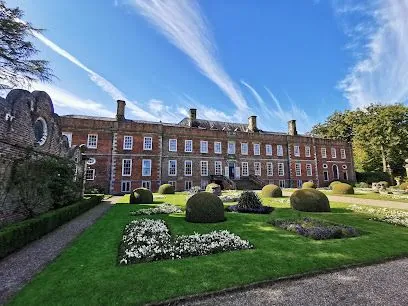
National Trust - Erddig
Learn More about National Trust - Erddig
Xplore! Science Discovery Centre
Learn More about Xplore! Science Discovery Centre