Slate Roofs in Nantwich
Does the slate on your Victorian or Georgian house need refixing, or replacing altogether?
Natural Welsh slate, Spanish slate and synthetic alternatives, laid and repaired with care
CALL US HERE - 01244 740253
GET A FREE ASSESSMENT
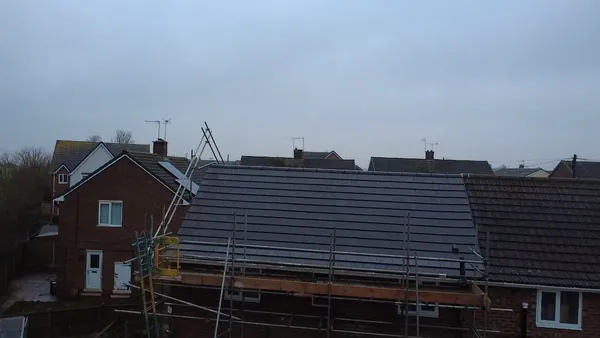
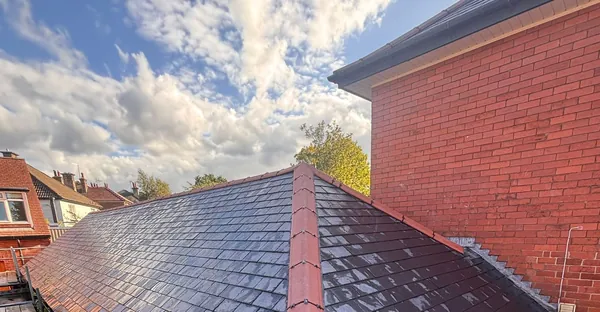
Once the railways made it cheap to move, Welsh slate became the ordinary roof of Victorian England, and Nantwich has a great deal of it. On a well-built roof the slate can last a century or longer, and many in the town are now past that point. What gives out first is almost never the slate but the nails, battens and lead holding it, so work on slate roofs in Nantwich is very often a matter of renewing those while keeping as much of the original stone as possible.
Our roofers have worked with natural Welsh slate, Spanish slate and synthetic slate for over 25 years. Each has its place. On a period house in a conservation area, though, the choice between them is not simply a question of cost.
Below we set out the work we do, how the town's buildings bear on it and what it usually costs. For problems that need fixing rather than a full re-roof, see our roof repairs page for Nantwich.
Slate Roofing Services For Nantwich Properties
Re-slating with salvage
The roof is stripped, the slates sorted, and the sound ones refixed on new battens and membrane, with matching slate making up the shortfall. This keeps the original colour and texture of the roof, which on a terrace of identical houses is often the main consideration. It is also the greener option, since less goes to waste.
Full replacement in new slate
Where too few slates are worth keeping, we re-roof in new natural slate, choosing Welsh for the closest match to traditional roofs or Spanish as a more affordable alternative. Synthetic slate is lighter and very uniform, and it suits newer buildings and extensions better than period ones, especially where the roof can be seen from the street.
Repairs and leadwork
A slipped slate, a cracked valley or a tired chimney flashing can usually be dealt with without disturbing the rest of the roof. Prompt attention pays here, because water that gets behind slate rots the battens beneath without showing anything on the surface. A look from the ground once a year, or after a storm, catches most of it.

1,000+ Roof Repairs
500+ Replacement
Slate, Heritage And The Nantwich Conservation Area
Nantwich has among the highest concentrations of listed buildings of any town in England, most of them within the conservation area that covers the old centre and runs across the River Weaver along Welsh Row. Alongside the black-and-white timber-framed houses stand Georgian brick town houses and later Victorian buildings, and many of those carry slate. On a listed building, slate generally has to be replaced with slate of the same kind, and the council's conservation officers will often have a view on its source and size.
Beyond the centre, the late Victorian and Edwardian streets are where slate is most common on ordinary houses. Those roofs are now at the age when nails and battens fail, and a slope begins to shed slates in numbers rather than one at a time. Our Nantwich roofing page describes the other work we carry out across the town and its surrounding villages.
How We Approach A Slate Roof
Survey
We inspect the slates, fixings, battens and leadwork, and test a sample of slates for soundness. The written estimate then sets out whether salvage is realistic and what it would cost compared with new slate.
Careful stripping
Slates are removed by hand, sorted and stacked, and any that are cracked, delaminating or too thin are set aside. This takes longer than tearing the roof off, but it is the only way to keep the original material.
Laying
New membrane and treated battens are fixed, and the slates laid to the correct gauge and headlap for the pitch, nailed or hooked as suits the roof. Valleys, hips and abutments are finished in lead where the original detail called for it.
Handover
Photographs and video of each stage come through as the work goes on. When the scaffold is down and the site cleared, we hand over the guarantee, written to cover the slate and other materials as well as our labour.
Why Slate Roofs In Nantwich Are Worth Doing Properly
- A well-laid natural slate roof should last 75 years at the very least, and often a great deal longer.
- Matching slate keeps a terrace, or a conservation area street, looking as it was meant to.
- Salvaging sound original slate cuts waste and can reduce the cost of materials.
- Slate stands up well to the frost and wind that come across the open Cheshire Plain.
- Buyers value a properly renewed slate roof, particularly on a period house.
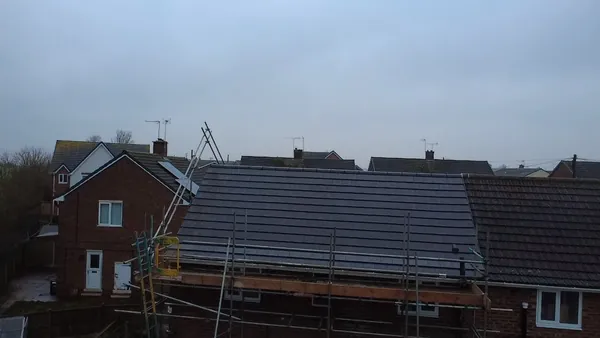
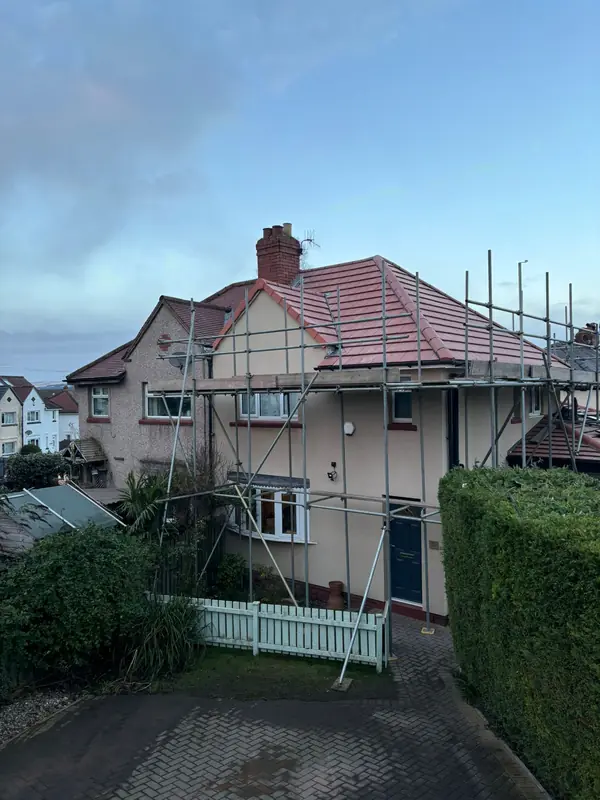
What Should A Slate Roof In Nantwich Cost?
A slate roof on a typical semi-detached house generally starts at around £5,000 and can reach £10,000 or more on larger or more complicated roofs. The type of slate makes a real difference, Welsh costing more than Spanish and synthetic less again, while pitch, chimneys, dormers and scaffolding all add to the total.
Two things tend to push the price up here. Listed and conservation area buildings may need natural or reclaimed slate of a particular size, which is dearer and harder to find. And some of the town's larger Georgian and Victorian houses have steep, tall roofs with several stacks, needing more scaffolding and more leadwork than a modern semi.
Slate Roofs in Nantwich: Your Questions
Can I change from slate to another material on a house in the conservation area?
On a listed building, almost certainly not without listed building consent from Cheshire East Council, and consent is unlikely for a cheaper substitute. On an unlisted house, re-roofing in a different material is often permitted development, but some conservation area properties have additional controls, so check with the council first. A heavier material may also need Building Regulations approval, because the roof structure has to carry the extra load.
Is Welsh slate the right match for a Victorian house in Nantwich?
In most cases it is, since Welsh slate was the usual roof for houses of that era in this part of England and it weathers in the same way as what is already there. Spanish slate can look very similar when new but differs in colour and texture over time, so where one house on a terrace is being re-roofed we would usually advise Welsh.
Does frost do much damage to slate roofs around here?
Good slate is hardly affected. Older slate that has begun to split into layers is another matter, because water gets between the layers and expands as it freezes. Clear, still winter nights bring hard frosts to low ground such as the Weaver valley, so delaminating slates are better replaced before a cold winter than after one.
Why are hooks used instead of nails on some slate roofs?
A slate hook holds each slate at its tail rather than near its head, which makes individual slates easier to replace later and suits some roofs well. Nails remain the traditional method and are what most period roofs used. We choose according to the slate, the pitch and what is appropriate for the building.
Is synthetic slate a sensible choice?
For an extension, a garage or a new building it can be. It is lighter, cheaper and uniform in appearance. Beside natural slate on a period house, or in a conservation area, it rarely looks right and will not last as long, so we generally recommend it only where the setting allows.
What To Do In Nantwich
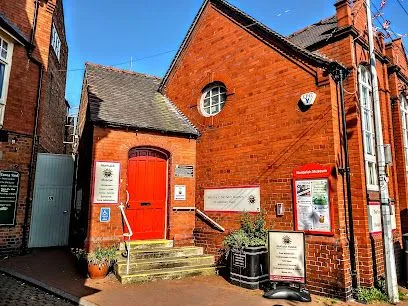
Nantwich Museum
Learn More about Nantwich Museum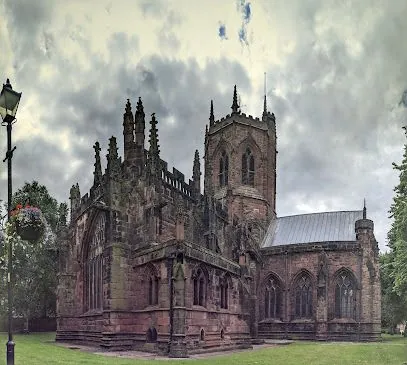
St Mary’s Church, Nantwich
Learn More about St Mary’s Church, Nantwich