Slate Roofs in Deeside
Has your old slate roof started dropping slates into the gutter?
Natural Welsh, Spanish and synthetic slate laid, replaced and repaired around Deeside.
CALL US HERE - 01244 740253
GET A FREE ASSESSMENT
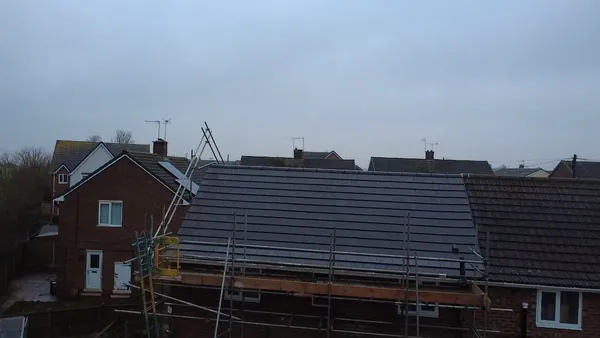
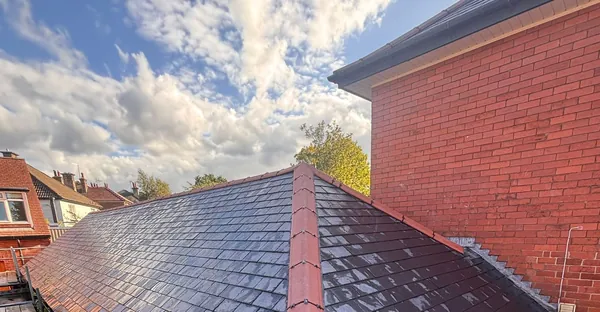
Slate is a North Wales material through and through, and slate roofs in Deeside are mostly found on the older housing. Shotton's first steelworks houses went up in the early 1900s, Garden City followed around the First World War, and parts of Connah's Quay grew up around its 19th-century port and railway. Plenty of those roofs are still original, or close to it.
The slate itself lasts a very long time. What gives out first is usually the nails, the battens and the underlay. We repair, re-slate and install new slate roofs, with more than 25 years of experience behind us and natural Welsh, Spanish and synthetic slate on offer.
Below is how the options compare, what the estuary weather does to slate and what it costs. If it's a stack rather than the slates giving trouble, see our chimney repairs in Deeside page. Our other local services are listed on the Deeside page.
Slate Options For Deeside Homes
Natural Welsh slate
Quarried in Gwynedd, Welsh slate is the dense blue-grey stone most of the region's older roofs were laid with. It's the dearest choice and the longest-lived. A well-fitted Welsh slate roof can last 75 years, often far longer. On a period house, or anything in Hawarden's conservation area, it's usually the right answer and the one least likely to raise questions.
Spanish slate
Spanish slate is natural stone too, and it costs noticeably less than Welsh. Quality varies from quarry to quarry, so the grade you choose matters, and we'll be clear about exactly what you're getting. It suits a re-slate where the budget is tight but you still want real stone, and fixed properly it handles frost and wind well.
Synthetic slate
Usually made from resin or fibre cement, synthetic slate is lighter, more uniform and cheaper again. It's a good fit for extensions, dormer cheeks and new builds where you want the look without the weight. It won't age like natural slate, though, so we'd steer you away from it for a patch on an old roof, where the difference would always show.

1,000+ Roof Repairs
500+ Replacement
What Deeside's Weather Does To A Slate Roof
Slate is brilliant at shedding rain, but each one stays put thanks to two nails near the top. On an Edwardian roof those nails may be well over a hundred years old. Once they rust through, which roofers call nail sickness, slates start sliding out one by one. On flat, open land by the Dee estuary the wind gets under a loose slate and finishes the job, which is why the first clue is often a slate lying on the path.
The other weak point is the headlap, how far each slate overlaps the one two courses below. Driving rain needs a generous lap, and on an exposed site it should sit towards the top of what the slate size allows. When we re-slate, we use copper or stainless nails and a breathable membrane, and set the battens to the gauge that gives that lap.
How A Re-Slate Or Slate Repair Runs
Survey
We check the slates, nails, ridge and leadwork, and look in the loft if we can. Your written and verbal estimate will cover repair, partial re-slate or full re-slate where each is a sensible option.
Strip and salvage
On a re-slate the old slates come off by hand and the sound ones are stacked for reuse. Reusing good slate cuts the cost and keeps the original colour, which matters most on a front elevation.
Membrane, battens and holing
A new membrane and treated battens go on. New slates are holed and sorted by thickness so the courses lie flat, then fixed with copper or stainless nails that won't rust out the way the old ones did.
Ridges, lead and handover
Ridges go back on, lead flashings and valleys are renewed, and the scaffold comes down once the site is cleared. You'll have had photo and video updates as it progressed, plus guarantees on materials and workmanship.
Why Choose Us For Slate Roofs In Deeside
- Welsh, Spanish and synthetic slate all available, with an honest view on which one your house needs.
- Sound original slates salvaged and reused where possible to save money and keep the colour right.
- Copper or stainless fixings, so the nail sickness that finished the old roof doesn't come back.
- Laps set for exposed estuary weather rather than the minimum a sheltered roof could get away with.
- Over 25 years of roofing behind us, and guarantees covering both materials and workmanship.
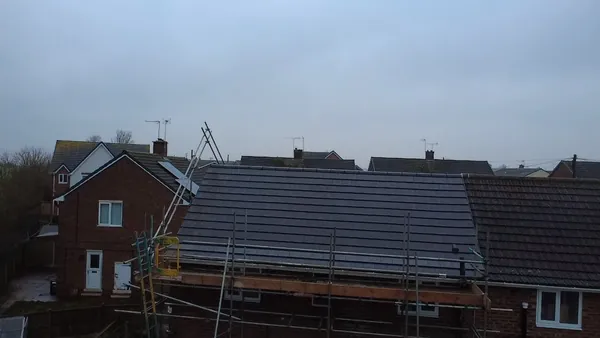
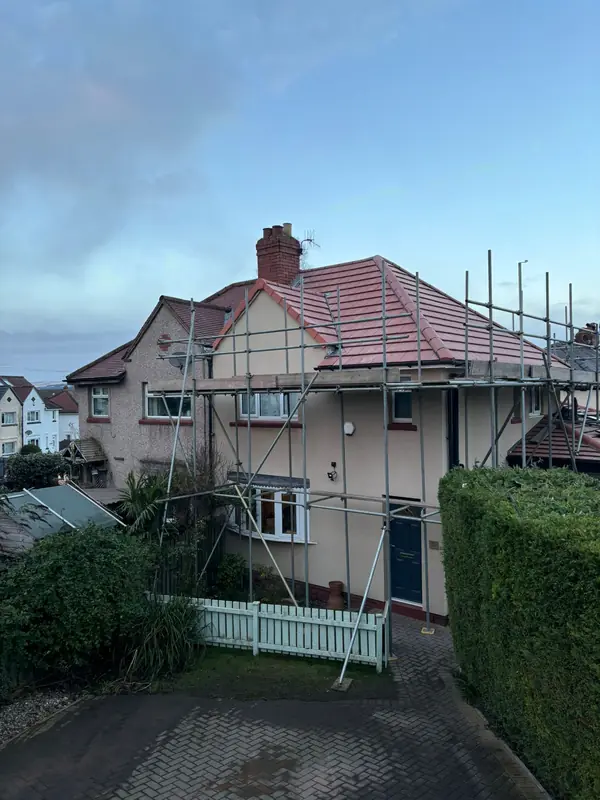
How Much A Slate Roof Costs In Deeside
Slate is a premium covering. A full re-slate usually starts around £5,000 for a semi-detached house and can pass £10,000 on larger or more complicated roofs. Welsh slate costs more than Spanish, and synthetic less again. Repairs to a handful of slipped slates cost far less, often a few hundred pounds.
Deeside's older terraces bring their own costs. Party walls, stacks shared with next door and fronts that open straight onto the pavement all affect scaffolding and leadwork. If enough original slate can be saved, the bill drops. If the battens and timbers underneath have rotted, it rises, and you'll know about it before anything is agreed.
Slate Roofs in Deeside: Your Questions
Can I swap my slate roof for concrete tiles in Deeside?
On an ordinary house, Welsh permitted development rules expect a new roof covering to look similar to the old one, so moving from slate to concrete tile may need planning permission from Flintshire County Council. On a listed building, or inside Hawarden's conservation area, expect the council to want slate kept. A heavier covering can also bring in Building Regulations for the roof structure.
Why do slates keep slipping off my roof in winter?
Usually nail sickness. The original iron nails rust through after decades, and each slate is then held only by friction and its neighbours. Winter gusts off the Dee estuary shake them loose. Tingles can hold individual slates for a while, but if they're slipping all over the roof, re-slating with new fixings is the fix that lasts.
Are slate roofs common on Deeside houses?
On the older housing, yes. A lot of the early 20th-century homes built as the steelworks grew were roofed in slate. Later estates, from the postwar years on, mostly went to concrete tiles. If you're not sure what's on yours, it takes a roofer about a minute at the survey to tell you.
Can new slate be mixed with my old slate?
On the same slope it rarely looks right, because weathered slate and new slate are different shades. The usual answer is to put salvaged original slate on the front and new slate of the same type on the back. The street-facing side keeps its look and you only buy new stone where nobody will notice.
Is synthetic slate a false economy?
Not for the right job. On an extension, dormer or new build it's light, consistent and good value. It falls short on an old natural-slate roof, because it won't weather the same way and a patch will always stand out. It also won't match the lifespan of good natural slate.
What To Do In Deeside

Deeside Leisure Centre and Ice Rink
Learn More about Deeside Leisure Centre and Ice Rink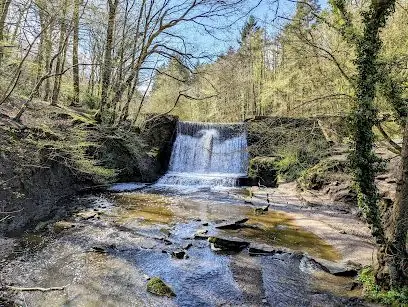
Wepre Park
Learn More about Wepre Park