
Roof Replacement in Deeside
Is your Deeside roof losing the fight with the estuary weather?
Full strip-and-renew roofing for Deeside homes in tile, slate, felt or rubber.
CALL US HERE - 01244 740253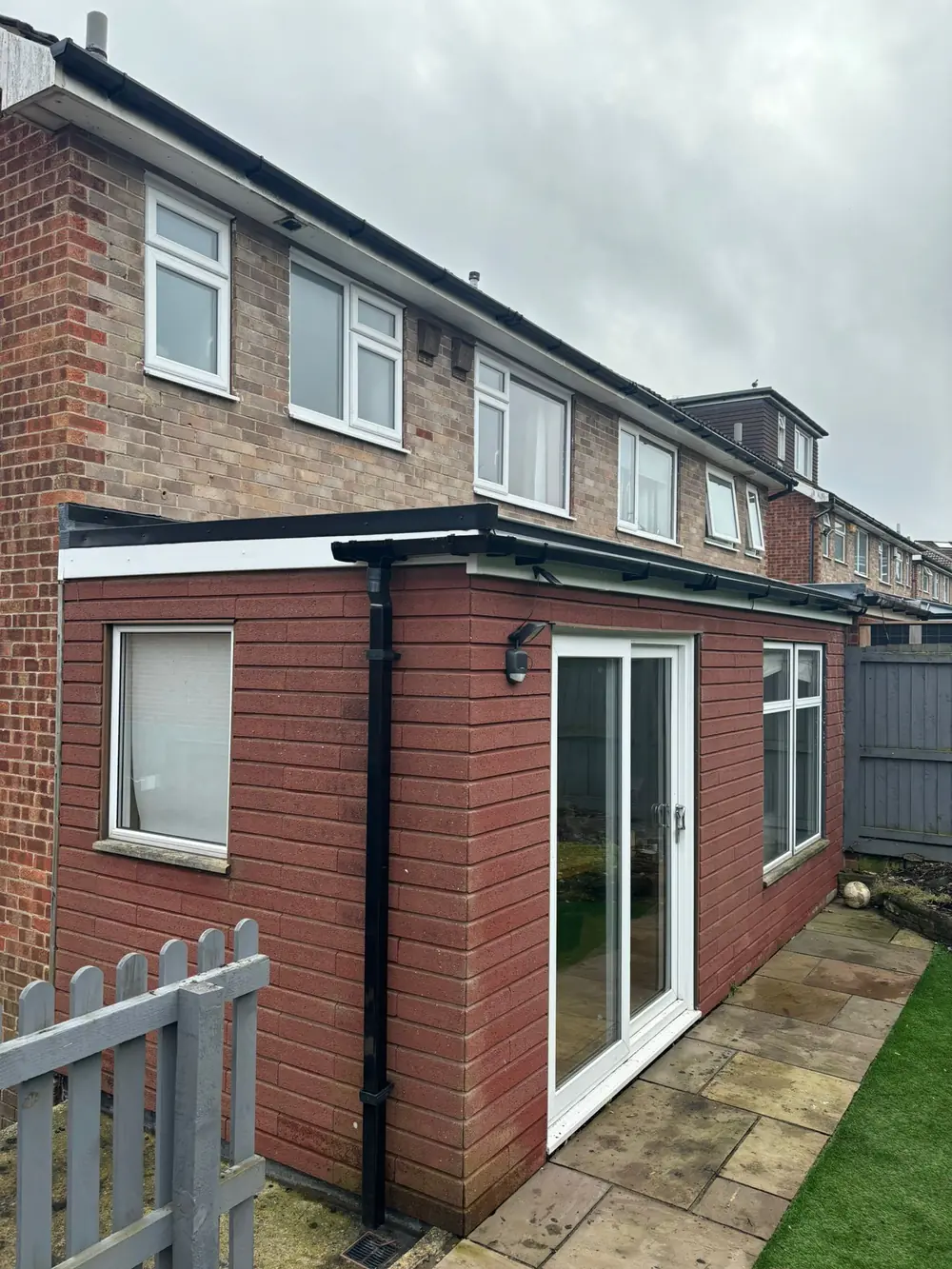
GET A FREE ASSESSMENT
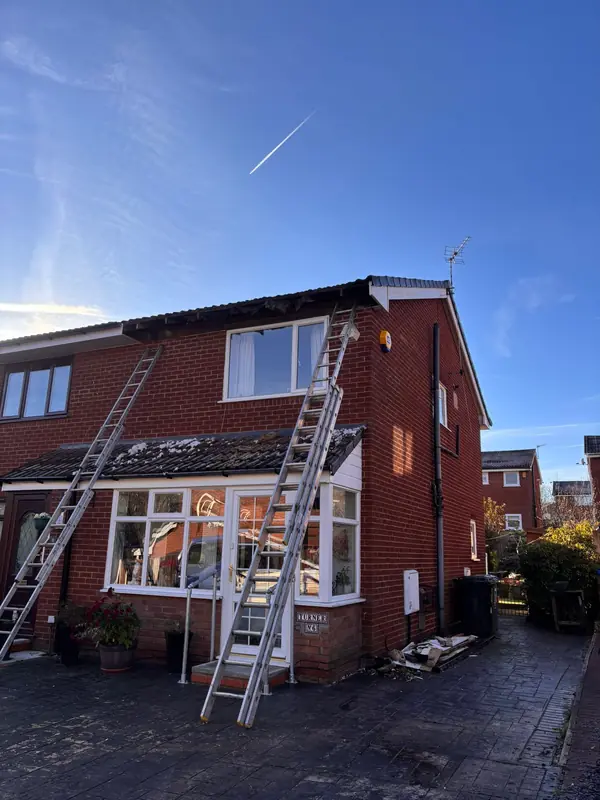
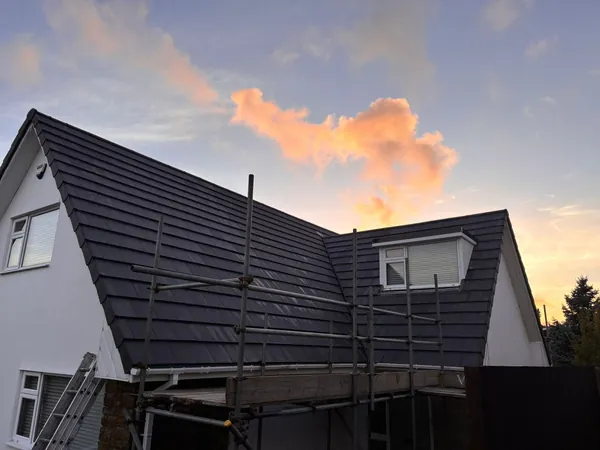
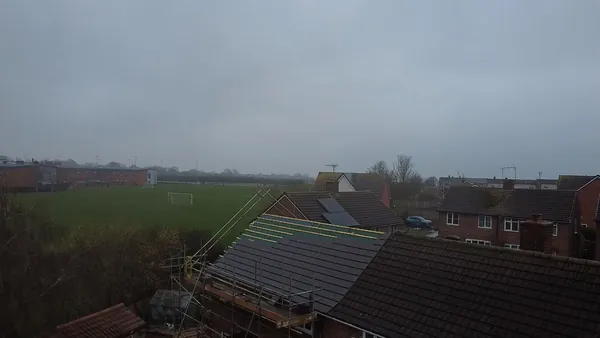
Wind off the Dee estuary has nothing much to slow it down. The land between Connah's Quay and Sealand is flat, and a roof sitting on it takes the full weight of every wet south-westerly. When a roof has been patched for years and still lets water in, roof replacement in Deeside is usually where your money starts going further.
We're Chester Roofers & Contractors, and our roofers have over 25 years in the trade and more than 500 full replacements behind them. We strip back to the rafters, see what's really underneath, then build the new roof up layer by layer: membrane, battens, covering, ridges, lead.
Below you'll find the covering options, what the local weather does to an old roof, how the job runs and roughly what it costs. Everything else we do in the area is on our Deeside roofing page.
Roof Coverings That Suit Deeside Houses
Natural or Spanish slate
Much of the oldest housing in Shotton and Connah's Quay went up in the early 1900s, while the steelworks was growing fast, and slate was the normal covering then. If your house started life with slate, putting slate back keeps the street looking right. Welsh slate is the premium pick. Spanish costs less and still shrugs off a hard winter. There's more on our slate roofs in Deeside page.
Concrete or clay tiles
Postwar and later estates around Mancot, Ewloe and Connah's Quay were mostly roofed in concrete interlocking tiles. They're heavy, which helps in a gale, and they're the cheapest pitched covering to put back. Clay suits older semis that had it first time round. Either way, the new tiles are mechanically fixed to the current standard instead of just hooked over the battens by their nibs.
Flat roof sections
Lots of Deeside homes have a flat-roofed back extension, porch or garage alongside the main roof. If the scaffold is already up for the main job, it's often worth redoing those too and paying for access once. GRP, EPDM rubber and torch-on felt are all options, and we'll tell you which one fits the size of roof and how you use it.

1,000+ Roof Repairs
500+ Replacement
What The Dee Estuary Does To Roofs In Deeside
Deeside grew up on reclaimed marsh beside the canalised Dee. There are no hills to break the weather, so rain arrives sideways more often than straight down. Driving rain finds slipped tiles, tired lead flashing and cracked ridge mortar quickly. On an old roof the underlay is often the original bitumen felt, which goes brittle and splits along the batten lines. Once that layer has gone, the tiles are the only thing between the weather and your loft.
Age matters as much as exposure. Shotton's steelworks housing dates from the early 1900s, Garden City from around the First World War, and Connah's Quay absorbed Golftyn, Kelsterton and Wepre with big estates from the 1970s onwards. Each era fails differently. The oldest roofs suffer nail sickness, where rusted nails let slates slide out, plus tired timbers. The 1970s roofs tend to have concrete tiles that have worn soft and porous.
How A Full Roof Replacement Runs
Free survey
A roofer goes up and looks at the covering, timbers, flashings and gutters. Afterwards you get a written and a verbal estimate, normally with a few options at different prices, so you can weigh a like-for-like job against an upgrade.
Scaffold and strip
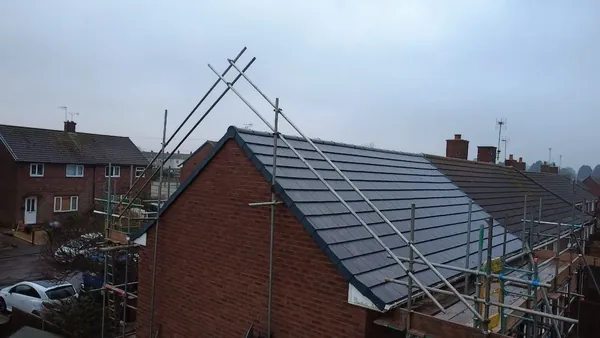
Scaffolding goes up and the old covering comes off in sections. We never strip more than we can weather in that day. If rain is forecast, which here is most of the week, the open area is sheeted over before anyone goes home.
Timbers, membrane and battens
Rotten rafters and sagging sections get repaired. A breathable membrane goes on, then new treated battens set to the gauge your tile or slate needs. Getting the lap right at this stage is what stops wind-driven rain creeping uphill under the covering.
Covering, leadwork and handover
The new tiles or slates go on, then ridges, verges and fresh lead flashings. Photo and video updates come through as each stage is finished. When it's done we clear the site and hand over guarantees on the materials and the workmanship.
Why Deeside Homeowners Call Us For A New Roof
- More than 500 roof replacements completed over 25-plus years, on slate, clay, concrete tile and flat roofs.
- A free survey with a written and verbal quote, often with two or three price options.
- Open areas sheeted at the end of every day, so a squall off the estuary never reaches your ceilings.
- Photos and video of the timbers and membrane before they're covered, so you see what you paid for.
- Guarantees covering materials and workmanship, with a 24-hour emergency line if anything else goes wrong.
Roof Replacement Costs In Deeside
Most roof replacements we price land between £3,000 and £30,000. The low end is a small single-storey roof in concrete tile. The high end is a big detached house in natural slate with new timbers and plenty of leadwork. Size, pitch, covering, timber condition and the number of chimneys and valleys all move the figure.
Two local things show up on Deeside quotes. Terraced streets in Shotton and Queensferry often mean scaffolding over a front pavement, which can need a licence and adds a little. And on open plots near the estuary we may suggest extra fixings at the eaves, verges and ridge, because that's where wind gets hold of a roof first. You'll see each as its own line, not buried in a total.
Roof Replacement in Deeside: Your Questions
Do I need permission from Flintshire County Council to replace my roof?
Not planning permission, usually. Welsh rules let you re-roof a house without it as long as the new covering looks similar to the old. Building Regulations are separate: re-covering a roof in Wales normally needs approval, and the insulation usually has to come up to standard. If you're in Hawarden's conservation area or the house is listed, speak to Flintshire County Council before changing materials.
Why does water only get in when the wind is driving the rain sideways?
Because the rain is being pushed sideways and up the slope. On flat, open ground like the Dee estuary, gusts drive water under tiles that would shed it fine in still weather. It points to short laps, slipped tiles or perished underlay rather than one broken tile. On an old roof where it keeps happening, replacing is often cheaper than chasing it every winter.
Do you cover all of Deeside, including Sealand and Hawarden?
Yes. We're on Sandy Lane in Chester, so Queensferry, Sandycroft, Mancot and Garden City are a short drive, and Connah's Quay, Shotton, Hawarden and Sealand are barely further. Surveys are free across the whole area, and for anything urgent we can have a roofer with you within 24 hours.
How long does a full roof replacement take?
A typical semi or terrace is often around one to two weeks once the scaffold is up. Bigger roofs, slate and jobs with lots of timber repair take longer. Weather adds days too, because we won't lay tile or slate in high wind. We'd rather lose an afternoon than rush the battens, and your quote will carry a realistic timescale.
Can I keep my old tiles to save money?
Sometimes. Old slate is often worth reusing when most of it is sound. Old concrete tiles are another story: once they've gone porous they hold water and grow moss, so laying them back onto a new membrane wastes what you've spent underneath. We'll tell you honestly which way your roof goes.
What To Do In Deeside

Deeside Leisure Centre and Ice Rink
Learn More about Deeside Leisure Centre and Ice Rink
Wepre Park
Learn More about Wepre Park